A few years ago, my manager asked me to deliver a presentation to the team about “professional development”…I guess that was the ransom of seniority! So far, I only had to talk about technical stuff! Well, that assignment was a good opportunity to do some self-reflection. I will share in a series of posts about what came out of that presentation. This is mostly personal thoughts, I’m pretty sure someone else dedicated even more time to the topic so feel free to chime in or share any related resources…
The first question is the definition of success. How do you define someone as successful? Spoiler alert, according to me, that definition is very personal and might differ a lot from an individual to the other…
Different Paths, Different Outcomes #
I joined Cisco in September 1999 as a TAC engineer and I was part of a large team of new graduates. What are my former colleagues doing today? Some of them are still in Cisco in various positions such as consultant, manager, sales,… Other left and/or acquired prestigious titles such as CEO, director, VP,… Some of them were still working in TAC 20+ years later. One even left to become primary school teacher in a small Spanish village. Are some of these people more successful than others?
Well, again, it depends on how we define success. Some of these people definitely have a bigger paycheck than others…does it make them more successful? Should we involve happiness in the equation? That makes it even more complicated, especially considering the good old saying “money can’t buy happiness”.
Maslow to the Rescue #
Trying to sort it out, I remembered a concept I learned during my university years. Even in an engineering school, we had a marketing class and if there is one thing I still remember from there, this is the concept of “hierarchy of needs” introduced by Maslow.
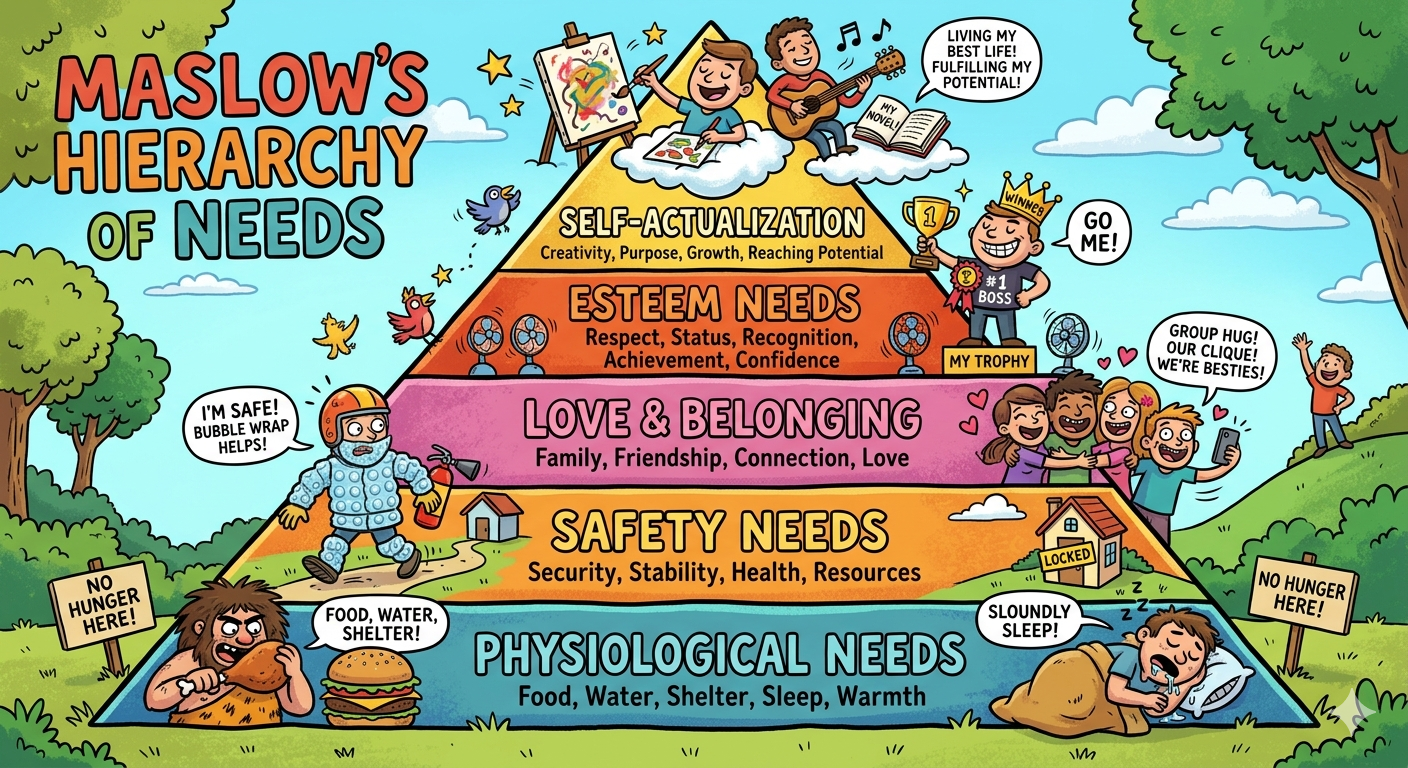
In a nutshell, this is a 5-layer pyramid, we start at the bottom and can only climb to the next layer once we have fulfilled the previous one. This starts with the physiological needs that keep you alive. The next layer is to get a job and home. When you have built your nest, you can then move to the next step which is to populate it with a family or just find some friends around. Next you could get more involved in the broader community around you and finally, the last step is looking after the greater good… What if the definition of success was simply to reach the top of that pyramid?
The Professional Pyramid #
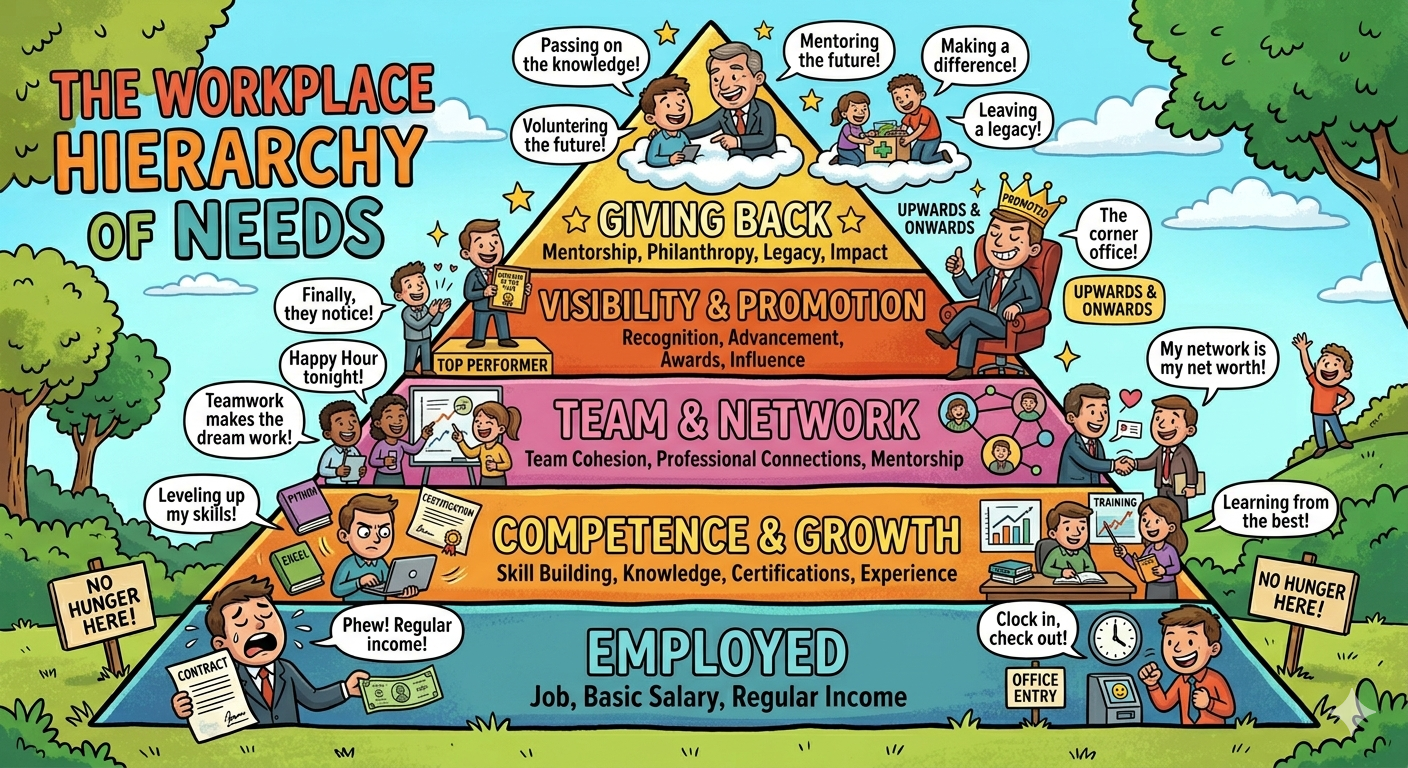
Something is missing though! These needs are mostly related to your personal life. This topic probably deserves additional research but we could also consider a parallel pyramid dedicated to the professional life. We could imagine something where the layers would be as follows:
- Employed — having a job, a regular income, basic financial security
- Competence & Growth — building skills, earning certifications, becoming genuinely good at what you do
- Team & Network — your team, your professional connections, the people you can call on
- Visibility & Promotion — recognition, advancement, reputation in your field
- Giving Back — mentoring, leaving the profession better than you found it
Working to Live vs. Living to Work #
While imperfect, we could use these two pyramids to go through different behaviours in life.
Some people are “working to live”. They would just do the bare minimum at work to earn enough money to meet their needs out of work. That means they would not try to go above the second layer of the work pyramid, focusing instead on climbing the personal pyramid.
Some others, sometimes negatively called workaholics, would “live to work”, they would dedicate their life to their work and focus mostly on the professional pyramid.
Lastly, another approach could try to balance both pyramids… instead of trying to focus on a single pyramid, we would try to climb as many levels of both pyramids.
This is where it becomes interesting. Let’s consider two cases. Someone has reached the fourth level on both pyramids. Someone else has reached the top level on the professional pyramid but is still at the second layer of the original pyramid. Can’t we consider the first person as most successful?
This would deserve to be refined but this already illustrates the fact “success” is not black and white. I believe its definition is also something personal and can’t be easily generalized. Everyone should set their own objectives in life and consider themselves successful when they reach them.
Redefining My Own Goals #
Speaking personally, in the early years of my career, my “dream” was to become a CSO or CISO. That means I was looking mostly at a single pyramid. However, deep inside, I also wanted to raise a family. Over time however, my objectives evolved and morphed into the following:
- Enjoy my work
- Financial security: obviously, I wouldn’t be against a higher paycheck but it depends what I would need to sacrifice for it.
- Work resilience aka easily find another job the day I’m fired. This is related to the topic of continuous education we’ll discuss later
- Decent work/life balance: what is the point of having a family if you can’t spend enough quality time with them.
- Still be relevant when I’m 55, 65, 70 years old: with the pension plan getting close to a Ponzi scheme, I am not sure when I’ll be able to retire… …so who knows maybe I’ll become CISO one day, I still have quite some years to go :-)
The Missing Dimension: Time #
So far, I would consider myself relatively successful. The only thing I’m concerned is how to stay relevant when growing older. This also highlights another shortcoming of the previous pyramids. The time dimension! Things are dynamic! As we have seen your own definition of success might evolve as your position in the different pyramids. Life is not linear: you might lose your job, divorce,… And that’s exactly what the next illustration tries to capture.
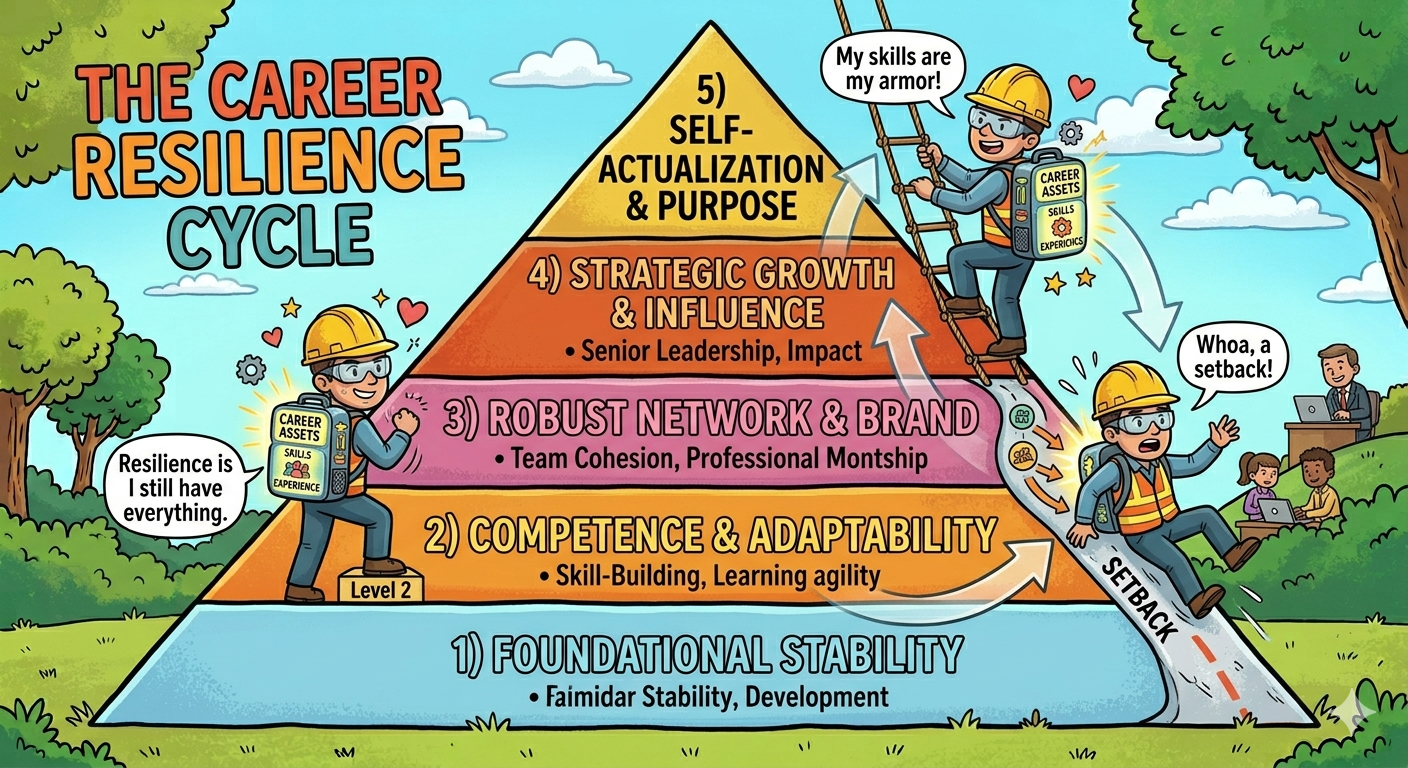
Instead of always climbing up in the pyramid, it should be possible to fall down as well. In that case, since you have tasted the upper level, are you really restarting from scratch? I guess that could be a topic for another post…