


|
|

The TN3270 Monitor application allows users to monitor statistics from Cisco TN3270 servers. For each instance of Cisco TN3270 Server running in the specified router, Cisco TN3270 Monitor establishes a TCP/IP connection to the first Cisco TN3270 Server-configured physical unit (using the IP address) and begins polling for the tn3270sGlobalTable and tn3270sStatsTable MIB variables. The TCP/IP connection allows the router to send Cisco TN3270 Server events to the Cisco TN3270 Monitor program. You can then view the events in filtered views.
For more information on how to configure the Cisco TN3270 Server, see the following URL:
http:// www-tac-sj.cisco.com/CiscoCD/data/doc/software/10_2/cscg/56868.htm
For more information on the commands used, refer to Access and Communication Servers Command Reference. For information about establishing TN3270 connections, refer to Cisco Access Connection Guide.
This appendix contains the following sections:
To access a device with TN3270 capabilities from CiscoView, complete the following steps:
Step 1 Go to CiscoView - Main.
Step 2 Select File>Open Device.
Step 3 Enter the IP address or host name in the Host field.
Step 4 Enter the Read Community string.
Step 5 Enter the Write Community string.
Step 6 Click OK.
The main window for your device appears. For information on functionality, see the online help for this product.
Step 7 Click on the TN3270 icon in the toolbar.
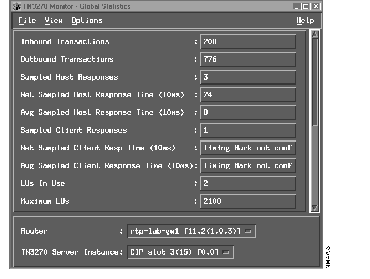
The TN3270 Monitor - Global Statistics window (Figure B-1) is the initial window for the TN3270 Monitor program. This windows displays the polling results. The polling interval is dynamically configured in the Preferences window.
The File, View, and Options items in the menu bar of this window allow you to access the functions of TN3270 Monitor and are described in Table B-1, Table B-2, and Table B-3.
| Menu Item | Description |
|---|---|
| Prints the contents of the current window to the default system printer. | |
| Exit | Exits the TN3270 Monitor program. |
| Menu Item | Description |
|---|---|
| Preferences | Displays the Preferences window, which allows you to override the defaults used by the program, such as the default print command. |
|
|