


|
|

The Resource Manager Software Management module helps you save time and effort when upgrading the devices in your network inventory. This chapter describes a common software management workflow scenario.
You can use the software management tasks to
The following sections are presented in this chapter:
The following sections describe a typical software management workflow. In this scenario, the network administrator performs the necessary steps to identify, plan, and execute a software upgrade for a group of devices and then perform the necessary maintenance tasks. Figure 8-1 shows the software management workflow.

Identification means evaluating the change to be made and determining which software images need to be changed, and how this will affect your network.
To identify the required change, you must determine which new features or fixes are available. The resources available to you are
Consider the ramifications of the changes you are planning to implement. Some of the factors you should consider are presented in the following sections.
Depending on when and how you schedule your upgrade, you might disrupt network operation. Schedule the reboot to accommodate minimum downtime for your users. Make the appropriate preparations and notify users of possible disruption.
Scenario: Before you perform an upgrade, you need to make sure the RAM and Flash memory sizes of the devices are sufficient.
To determine memory sizes, perform the following steps:
Step 1 
Click Tasks on the button bar, then select Inventory > Hardware Report.
The Hardware Summary Report dialog box appears. (See Figure 8-2.)
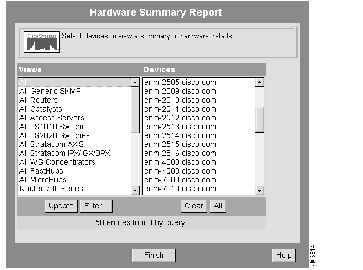
Step 2 Select the devices you want to upgrade, then click Finish.
The Hardware Summary Report window appears, displaying information for the selected devices.
Step 3 Click RAM Size (MB) to sort by RAM size or Flash Size (MB) to sort by Flash memory size, then print the report.
Step 4 Select Tools > CCO Tools, then select either Browse CCO IOS Software or Browse CCO Switch Software depending on the device type. Browse CCO to determine the memory requirements for the images you want to upgrade.
If your device does not have sufficient RAM or Flash memory, you will need to upgrade the memory before you upgrade the software image.
You have identified the devices you want to upgrade and which upgrades will cause memory or compatibility conflicts. You must resolve all conflicts before you prepare your final upgrade list.
Now you are ready to plan the software management workflow.
During the planning phase, you determine which software images to add to your software library, prepare for the upgrade, and download the appropriate images into your software library.
Make sure you consider the following:

If you want the rollback option to be available, you must check out a backup copy of the current software image for each device you want to back up into the software library. See "Retrieving Software Images" for more information.
If you decide later to use the previous software image, you can perform or schedule an upgrade for the device, specifying the old revision. See "Setting Up an Upgrade" for more information.
You need to know the following before you schedule your upgrades:
Use the Resource Manager inventory features to determine the specifics.
Scenario: After you determine which devices on your network require an upgrade, you can retrieve the appropriate software images from CCO and add them to your library.
To add software images to your library, perform the following steps:
Step 1 
Log in with administrator privileges.
Step 2 Click Tasks on the button bar, then select Software Management > Add Image to Library.
The Select Image Source dialog box appears. (See Figure 8-4.)
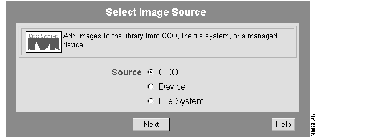
Step 3 Select CCO, then click Next.
The Select Devices dialog box appears. (See Figure 8-5.)
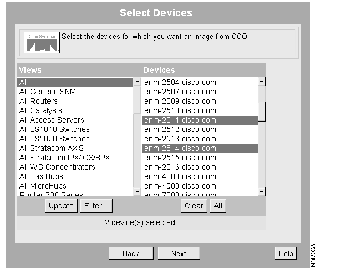
Step 4 From the Views column, select a view that contains devices you want to upgrade. Select the appropriate devices from the Devices column, then click Next.
Selecting one or more devices from the Devices column identifies a subset of device software images and helps you narrow your options in subsequent dialog boxes.
The Login for CCO dialog box appears. (See Figure 8-6.)
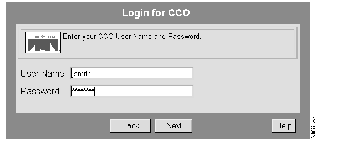
Step 5 Enter your CCO user name and password, then click Next.
The software image selection menus appear.
Step 6 In the Select a Device/Platform frame, select the device link corresponding to the device you want to upgrade.
The available software release images for that device appear in the Software Versions frame.
Step 7 Select the software version upgrade for the device.
The subset images for that software image release appear in the Software Subset Images frame.
Step 8 Select the subset image for the software image release.
The Images to Download appear in the bottom frame.
Step 9 Verify that the version and subset image are correct, then click Next.
The Select Images to Download dialog box appears. (See Figure 8-7.)
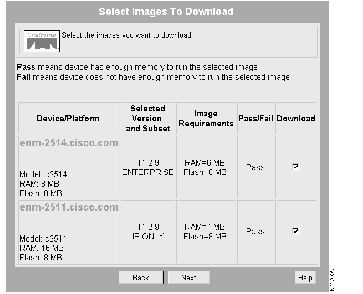
This dialog box verifies whether the device has enough memory for the selected image. If the device does not have enough memory, the word "Fail" appears in the Pass/Fail column. If the device does have enough memory to run the selected software image, the word "Pass" appears in the Pass/Fail column and you can proceed with the download. You can still download a failed image if you deselect the Download check box first.
Step 10 Make sure the Download check box is selected, then click Next.
The Confirm Image Download dialog box appears. (See Figure 8-8.)
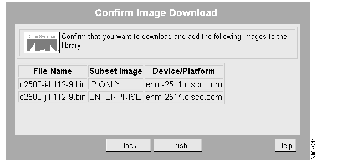
Step 11 Verify that the filename, subset image, and target device/platform are correct, then click Finish.
A Javascript Confirm message appears, notifying you the download might take a while.
Step 12 Click OK.
The selected software image is downloaded from CCO to your software library and the Add-To-Library Summary appears, indicating whether the download was completed successfully. (See Figure 8-9.)
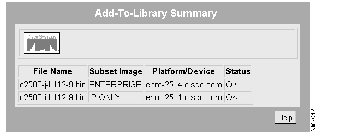
Step 13 Verify that the filename, subset image, target platform/device, and status are correct.
The procedures in this section describe the tasks required to perform a software image upgrade.
Scenario: You have downloaded the needed software images to your software library and you are prepared to set up your upgrade.
To set up an upgrade, perform the following steps:
Step 1
Log in with administrator privileges.
Step 2 Click Tasks on the button bar, then select Software Management > Distribute Images.
The Select Device Type dialog box appears. (See Figure 8-10.)
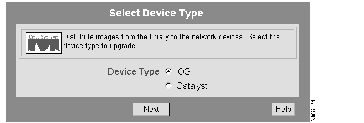
Step 3 Select IOS, then click Next.
The Select IOS Devices dialog box appears. (See Figure 8-11.)
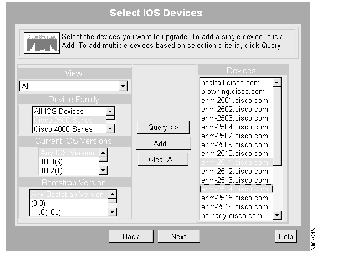
Step 4 Use the dialog box to select the devices to upgrade, then click Next.
The Recommended Image Upgrade dialog box appears. (See Figure 8-12.)
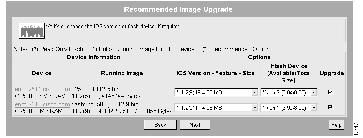
Step 5 Select the Cisco IOS version, feature-size, and Flash device for each selected device, then click Next.
The Verify Image Upgrade dialog box appears. (See Figure 8-13.)
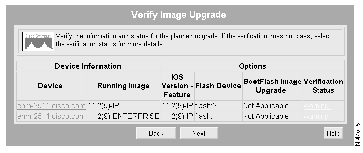
Step 6 Check the verification status, make any necessary changes by going back to the Image Upgrade dialog box, then click Next.
The Distribution Sequence dialog box appears if more than one upgrade is being scheduled. (See Figure 8-14.)
If only one upgrade is being scheduled, the Job Control Information dialog box appears (See Figure 8-15). Proceed to Step 8.
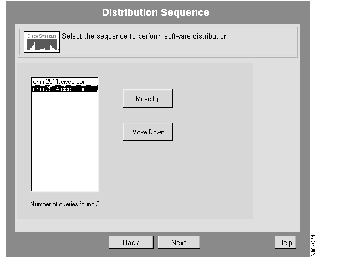
Step 7 Move the selected upgrades up or down the distribution sequence list as desired, then click Next.
The Job Control Information dialog box appears. (See Figure 8-15.)
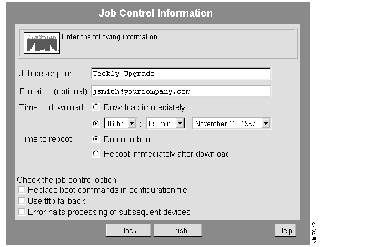
Step 8 Enter the job scheduling information, then click Finish.
If the job was scheduled successfully, the Distribute Image Summary dialog box appears. (See Figure 8-16.)
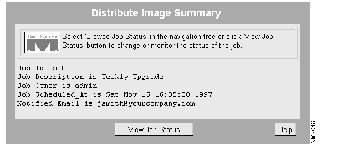
Step 9 Click View Job Status to see the Job Details and Change Schedule Options.
The Job Details report appears. (See Figure 8-17.)
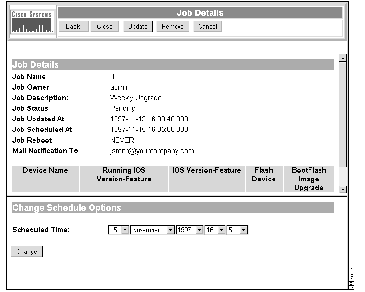
Step 10 You can optionally change the schedule, then close the report.
Scenario: One of your company's key product teams is in the crunch phase of an important project. You are informed that they will be working into the night and that this would be an inopportune time to interrupt network operation. You have scheduled your upgrades for tonight, but you need to reschedule them.
To change job control options, perform the following steps:
Step 1
Log in with administrator privileges.
Step 2 Click Tasks on the button bar, then select Software Management > Browse Job Status.
Step 3 A new browser window opens, displaying a list of all upgrade jobs.
Use the report to make changes to any scheduled software upgrade jobs and to review the results of completed jobs.
Step 4 To view detailed information and make changes, click on the job number link.
A new browser window opens, displaying the scheduled time for the job. Leave the date as it is, change the time of the upgrade, then click Change.
The job details, image information, and job results file appears.
Step 5 When you have finished reviewing the detailed information for a job, click Back to change another job or Close to close the report.
After you have upgraded device software images, you should check the status of your upgrades to verify the process has been completed successfully.
The verification features are
Scenario: After your upgrade, you need to know the status of the upgrade to make sure that it was performed properly.
To verify upgrades, perform the following steps:
Step 1
Log in with administrator privileges.
Step 2 Click Tasks on the button bar, then select Software Management > Search History by Device.
The Select Devices dialog box appears. (See Figure 8-18.)
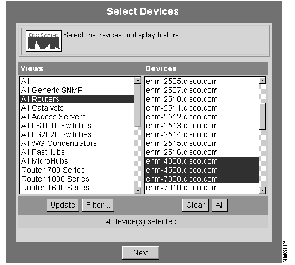
Step 3 Select the view and the devices in the view for which you set up an upgrade, then click Next.
The Select Search Options dialog box appears. (See Figure 8-19.)
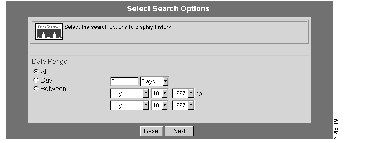
Step 4 Select the date range and time, then click Next.
The Software Modification History report appears for the selected devices. (See Figure 8-20.)

Step 5 Verify that the scheduled upgrades were performed and take corrective action, if necessary.
After completing the upgrade, you must clean up and prepare for future upgrades.
The images in the software library and the history records take up space on your drives. Depending upon the capacity at your site, you need to determine the following:
Scenario: You have viewed the status of your most recent upgrade and you want to clear some space on your hard drive by deleting old software images.
To delete old software images in your library, perform the following steps:
Step 1
Log in with administrator privileges.
Step 2 Click Tasks on the button bar, then select Software Management > Browse Library.
The Image Summary Report opens. You can use this report in the following ways:
 | Caution If you delete software images from the Resource Manager server, you cannot restore them. You must recheck them out of CCO. |
Step 3 When you are finished using the report, click Close.
Scenario: After you delete old software images, you decide to clear some additional space by deleting old history records.
To delete history records, perform the following steps:
Step 1
Log in with administrator privileges.
Step 2 Click Admin on the button bar, then select Software Management > Delete History.
The Delete History dialog box appears. (See Figure 8-21.)
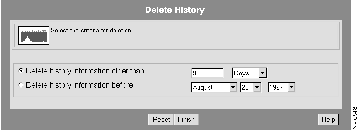
| Caution Once you delete history records from the Resource Manager server, you cannot restore them. Be careful when deleting history records. |
Step 3 Specify the criteria for the history records you want to delete, then click Finish.
Over time, the Job Control report can become filled with data about old completed jobs. You should remove some of these jobs.
You should maintain history reports for at least a year. Keep at least one previous software image version for each upgrade so you can roll back to the previous version if necessary. You can optionally delete images that are two or more versions back.
|
|