


|
|

You have now added devices to your network and created static and dynamic views. You are ready to put your device views to work by generating some reports that use them. This chapter provides some examples of inventory management reports that you can generate.
Cisco Resource Manager's inventory management features enable you to monitor your network inventory so that you can plan upgrades and rollouts.
When planning for upgrades and rollouts, ask yourself these questions:
You can synchronize the Resource Manager Schedule Collection features with your rollout and upgrade schedule, thus ensuring that the Resource Manager server contains the most current data.
The following topics are presented in this chapter:
Scenario: After you populate the server with device inventory data, you want to synchronize your upgrade schedule with the Resource Manager Schedule Collection and Inventory Change Report features.
Use the Schedule Collection feature to schedule the inventory collection process that polls each managed device for information and updates the inventory data stored on your Resource Manager server.
Then use the Inventory Change Report feature to determine what changes have occurred in your network inventory over a specified period of time.
To view the comprehensive list of the changes to your inventory data, run the Inventory Change Report after each run of the inventory collection process. To maintain your inventory changes, print or save a copy of the Inventory Change Report to refer to before the next scheduled run of the inventory collection process.
To set the parameters for your inventory collection schedule, perform the following steps:
Step 1 
Log in with administrator privileges.
Step 2 Click Admin on the button bar, then select Inventory > Schedule Collection.
The Set Inventory Collector Schedule dialog box appears. (See Figure 4-1.)
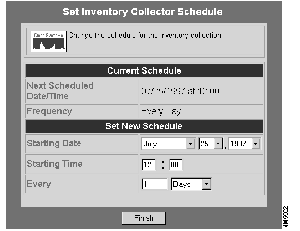
Step 3 Select the starting date and time. Alternatively, you can set the Schedule Collection process to collect inventory data after each specified period of time has passed. Use the Every fields to set this type of collection schedule.
Step 4 Click Finish.
The Schedule Collection parameters have been set.
Scenario: After you have set the schedule, you allow Resource Manager to collect inventory data during the specified time. After each scheduled collection, you run an Inventory Change Report to determine what, if any, devices have changed in your network inventory.
To display an inventory change report, perform the following steps:
Step 1 
Click Tasks on the button bar, then select Inventory > Inventory Change Report.
If any changes have occurred in the network inventory, the Inventory Change Report displays statistical information. (See Figure 4-2.)
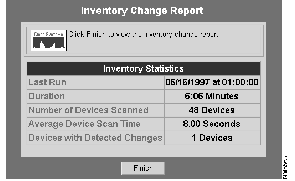
Step 2 Click Finish.
The Inventory Change Report displays the description, network and physical address, speed, and type of the device.
Scenario: As the network administrator, you need to upgrade all Cisco IOS 11.x devices on the network. To determine the scope of the work involved in such a task, you use some of the reports provided by the Inventory package.
To display inventory reports, perform the following procedure:
Step 1
Click Tasks on the button bar, then select Inventory > Major Software Version Graph.
The Major Software Version Graph dialog box appears. (See Figure 4-3.)
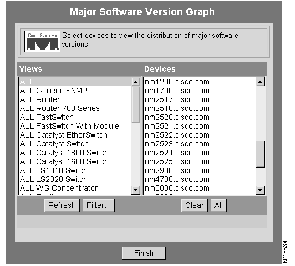
Step 2 In the Software Major Version Graph dialog box, select the All Router view.
The device selection dialog box is updated, listing the names of the managed devices that are routers.
Step 3 Click All under the Devices column to select all managed routers.
Step 4 Click Finish.
The Major Software Version Graph appears, showing the number of the various IOS versions installed on your managed routers. The count is the total number of devices on which the listed software versions are installed. The percentage columns display a bar graph and the numerical percentage of the selected group of devices for each software version. (See Figure 4-4.)
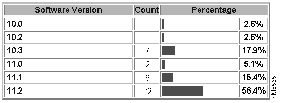
Step 5 To view other reports and graphs of the same device selection, select the desired report type from the Reports menu, then click Reports.
The selected report or graph appears.
Step 6 Print the report or graph and save it to a file.
Scenario: You want to display reports that display the hardware and software information of devices on your network. For your first report, you want to know what types and what types of chassis reside on all the routers on your network. Then you want to know what software versions they are running.
To display hardware and software reports, perform the following procedure:
Step 1
Click Tasks on the button bar, then select Inventory > Hardware Report.
The Hardware Summary Report dialog box appears. (See Figure 4-5.)
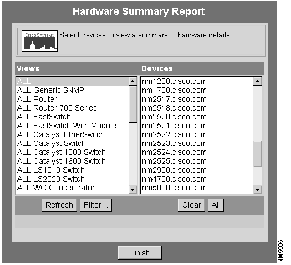
Step 2 Select a view from the Views column.
The devices in the selected view appear in the Devices column.
Step 3 Select devices or click All under the Devices column to select all devices in the view, then click Finish.
A tabular report of your selected devices appears.
Step 4 To sort the entries by chassis type, click the Type column heading.
Step 5 To get more detailed information about a particular device, click on the device name in the report.
The Device Center appears, listing the various inventory, availability, and syslog analysis reports available.
Step 6 To view the software version report, select Software Report in the Reports drop-down menu, then click Reports.
The Software Version Report for the selected group of devices appears.
Step 7 Click the Version link in the Cisco Router Class table to sort by version number, then print or save the report.
|
|