


|
|

You have added devices to your network and created some views with which to generate reports. You have also generated the reports you need to help stay aware of which devices are in your network and which software versions they are running. Now you want to use Cisco Resource Manager to monitor the devices in your network inventory and to determine their availability.
Resource Manager's availability management features help to determine network availability. You can use the availability management features to do the following:
The following topics are presented in this chapter:
Scenario: Before you can monitor device availability, you must select the views you want to monitor.
To set views and polling options, perform the following steps:
Step 1 
Log in with administrator privileges.
Step 2 Click Admin on the button bar, then select Availability > Change Polling Options.
The Select Polled Views dialog box appears. (See Figure 5-1.)
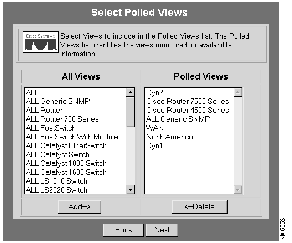
Step 3 Select the views you want to poll from the All Views list, then click Add to add them to your Polled Views list.
Step 4 Select the views you want to delete from the Polled Views list, then click Delete.
Step 5 Click Next.
The Change Polling Options dialog box appears. (See Figure 5-2.)
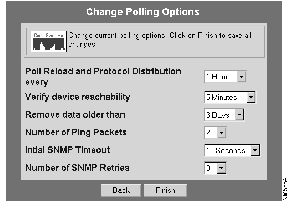
Step 6 Select values from the drop-down lists to change any of the polling options, then click Finish.
You can use the Reachability Dashboard to check device reachability and response time. Dashboard information is updated each minute.
Scenario: You want to quickly determine the availability (or reachability) of the devices in all your views.
To view the reachability dashboard, perform the following steps:
Step 1 
Click Tasks on the button bar, then select Availability > Reachability Dashboard.
The Reachability Dashboard appears for each view being polled. (See Figure 5-3.)
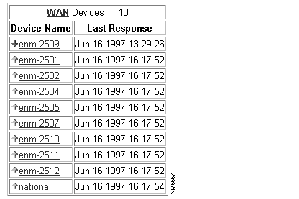
Step 2 Click the device name links to access the Device Center for more detailed availability information.
Step 3 When you are finished, click Close.
Scenario: You want to determine the overall availability of devices on your network .
To determine current network availability, perform the following steps:
Step 1
Click Tasks on the button bar, then select Availability > Availability Monitor.
The Select Devices dialog box appears. (See Figure 5-4.)
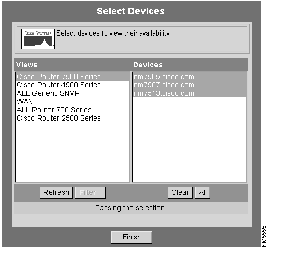
Step 2 Select ALL from the Views list, click All under the Devices list, then click Finish.
A window appears with the Availability Monitor report for the selected devices. (See Figure 5-5.)
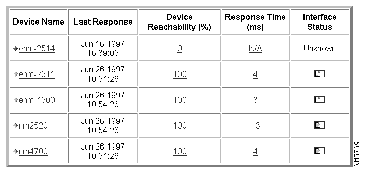
Step 3 Click the device links to access the Device Center for more detailed availability information.
Step 4 Click the Device Reachability (%) links to view the corresponding Device Reachability graph.
The Device Reachability graph appears. (See Figure 5-6.)
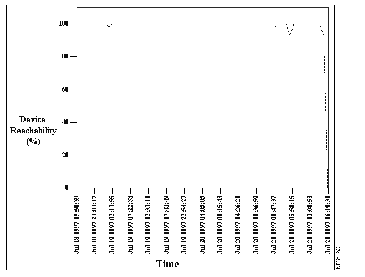
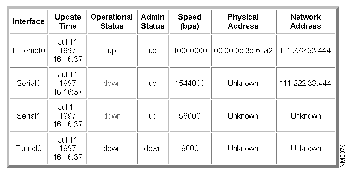
Step 5 Click the Interface Status links to view the Interface Details for the corresponding device.
The Interface Details report appears. (See Figure 5-7.) Print or save the report.
Scenario: Several devices on the network have crashed and reloaded overnight. You want to determine which devices have reloaded and why.
To determine your reload history, perform the following steps:
Step 1
Click Tasks on the button bar, then select Availability > Last Reload Report.
The Select Devices dialog box appears. (See Figure 5-4.)
Step 2 Select ALL from the Views list, then click All under the Devices list.
Step 3 Click Finish.
The Last Reload Report appears. (See Figure 5-8.)
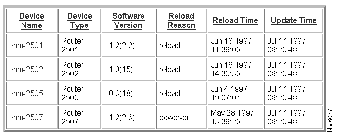
Step 4 To view the most recent reloads information for a specific period of time, select the period (for example, 1 Day) on the Reports drop-down menu and click Reports.
A results window appears containing the most recent reloads information for the last 24 hours.
Scenario: You are preparing for a network rollout and want to determine the protocol distribution of devices on the network.
To determine the current protocol distribution of a region, perform the following steps:
Step 1
Click Tasks on the button bar, then select Availability > Protocol Distribution Graph.
The Select Devices dialog box appears. (See Figure 5-4.)
Step 2 To select a view, select All for the device, then click Next.
The protocol distribution bar chart appears. (See Figure 5-9.)
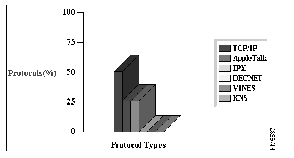
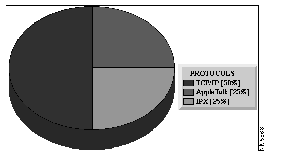
Step 3 To see the pie chart format, select Pie Chart on the Reports drop-down menu, then click Reports.
The Protocol Distribution pie-chart report appears. (See Figure 5-10.)
|
|