|
|
This chapter describes the Device Management and Sync w/Sybase applications and how to use them to build the CiscoWorks database. CiscoWorks uses the database information in several application functions. This chapter includes the following sections:
The Device Management application, also referred to as nmdevman, stores the device information you enter into the Sybase relational database.

Use the Sync w/Sybase application during initial setup of your network map to automatically add or update devices into the CiscoWorks database from the database of your particular platform. Then use the Sync w/Sybase or the Device Management application to add devices. If you add devices directly to Sybase, you can synchronize them with the devices in your network map by using the
Sybase--->Platform command. Sybase--->Platform is part of the Sync w/Sybase application. For more information on how to run this application, refer to the section "Using Sync w/Sybase" later in this chapter.
CiscoWorks Applications That Use the Database
The Device Management application provides electronic forms, to record or browse the relevant data on each network device. As an option, you can use the Sync w/Sybase application to create equivalent database entries automatically.
If you plan to use CiscoWorks applications that use Sybase, be sure you complete the necessary database forms. If you do not have the necessary information in the database, error messages will display or the application will not be able to access the most current devices.
The following CiscoWorks applications use the database data initialized by Sync w/Sybase or Device Management applications:

For more information on database table structure, refer to Appendix C, "CiscoWorks Database Tables." Using the Sync w/Sybase application is easier to use than gathering device data, so Sync w/ Sybase is discussed first. Later, you can use the Device Management application to add custom data that you must access for troubleshooting, such as contact, administration, or vendor information.
Sync w/Sybase polls the database files, then adds and updates devices in the CiscoWorks database. This process is similar to you manually adding the devices to your database using the Device Management application and initializing the devices.

The following information is added to your CiscoWorks database for each new or updated device:
If device information is already listed in your CiscoWorks database, Sync w/Sybase updates any changed information about this device. If device information does not exist in the CiscoWorks database, Sync w/Sybase adds it. If a device is currently unreachable or has a name that cannot be resolved, it will not be added to the CiscoWorks database.
If device information is added directly to the CiscoWorks database, you can use the Sybase---> Platform command, an option within Sync w/Sbase, to add the device to the database used by your particular platform.
Accessing Sync w/Sybase from the SunNet Manager Platform
Access Sync w/Sybase through either the Tools or Glyph menu. The degree of Sync w/Sybase functionality depends on which menu you use to activate the application:
Accessing Sync w/Sybase from the HP OpenView or NetView for AIX Platform
With HP OpenView or NetView, you can run Sync w/Sybase with or without a network map displayed on your monitor.
To open Sync w/Sybase, select Misc>Sync w/Sybase.
Figure 1-1 illustrates the Sync w/Sybase window and Table 1-1 describes its components.
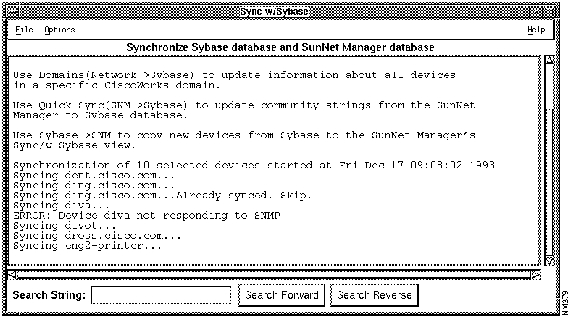
Figure 1-1 : Sync w/Sybase Window
Depending on the number of database records and the information contained in each, database synchronization can be time-consuming. To adjust for synchronization time and to meet special needs, select one of the following four commands from the Options menu of the Sync w/Sybase window:
Table 1-1 : Sync w/Sybase Window Components
| Component | Subcomponent | Description |
|---|---|---|
| File | Print
Save As Exit |
Prints a snapshot of the current window.
Displays a dialog box that allows you to specify a directory where you can save a copy of the current configuration. Exits the current window. |
| Option | Devices (Network---> Sybase)
Domains (Network---> Sybase) Quick Sync (Platform---> Sybase) Sybase--->Platform Timeout Interval |
Copies all database records from your platform database to Sybase.
Updates device records for the selected domain in the Sybase database. Creates only entries in the Sybase table for devices listed in the Sybase database. Copies only the device records from Sybase that did not yet exist in the platform database into the platform database. Displays a dialog box in which you can specify how much time can elapse before synchronization terminates and declares the device unreachable. You can also specify the default timeout using X Resource timeout Interval in your .Xdefaults file. The resource name is synchTimeout. |
| Help | On Version
On application |
Displays the CiscoWorks version information for this application.
Provides help text on the current window. |
| Search String field | Locates characters within browser text. | |
| Search Forward | Searches forward for a character string in the text. | |
| Search Reverse | Searches backward for a character string in the text. |
Adding Devices Using Sync w/Sybase on SunNet Manager
To add or update devices from your platform database to your CiscoWorks database, perform the following steps:
The device management operation of CiscoWorks software is primarily used to maintain long-term records pertaining to the networks and to collect and store performance data for later evaluation.
The database helps organize this information by providing the means for system operators to rapidly access online information and for network managers to respond to the long-term needs and growth of the system.
Adding Devices Using Sync w/Sybase on HP OpenView
To add or update devices from your platform database to your CiscoWorks database, perform the following steps:
The Device Management application allows you to add, delete, or modify information in the CiscoWorks database or synchronize the device lists of the CiscoWorks database and the platform database.
Devices can be any SNMP or IP equipment in your network. Examples include gateways, routers, servers, and workstations.
Through access to device information, you can isolate traffic-routing problems, redefine router characteristics using remote configuration, locate your network inventory, keep track of revisions or releases, and allocate resources on the network.
You should define the domain, interfaces, characteristics, vendor, serial number, revision level, and contacts for each device. If you choose not to use the Device Management windows, you can use the Sync w/Sybase application, which adds devices from the platform database to the CiscoWorks database.
If you have set up authentication checking for Device Management, each time you or another user try to access Device Management, a username and password are requested. If you previously used the Tools menu Login application to log into CiscoWorks, the user identification window will not display. If you have not used the Login application, each time you access Device Management, CiscoWorks prompts you for a user login and password. This login controls access to data stored in the database. If your user login does not have Sybase account permission, you will not have access to Device Management.
Adding, Modifying, or Deleting a New Device
The section discusses how to enter a new device through the Device Management windows. The data includes information about the devices and the people who maintain them.
To add a device to the database, perform the following steps:
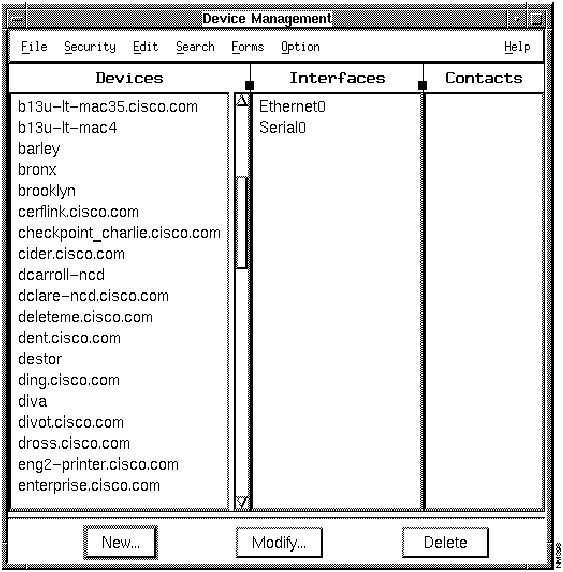
Figure 1-2 : Device Management Window
Table 1-2 : Device Management Components
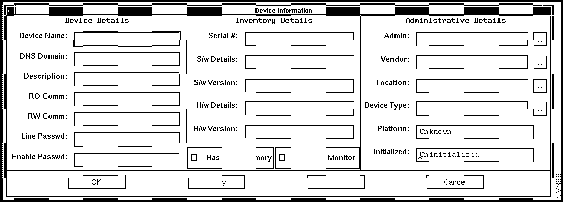
Figure 1-3 : Device Information Window Table 1-3 : Device Details Components
Table 1-4 : Inventory Details Components
Table 1-5 : Administrative Details Components
To modify the data on an existing device, perform the following steps:
To delete the data on an existing device, perform the following steps:
Adding, Editing, or Deleting a New Interface
The Interfaces portion of the Device Management window lists the network interfaces that are supported by the selected device.
Adding or Editing a New Interface
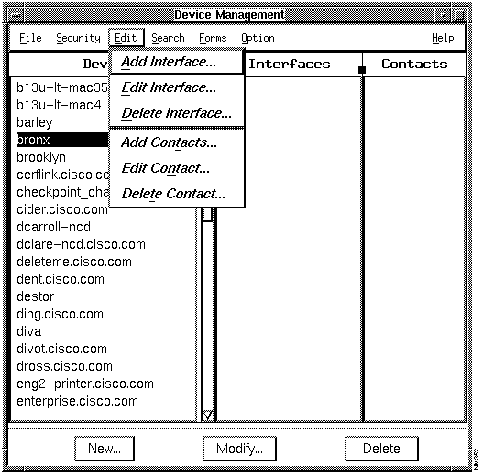
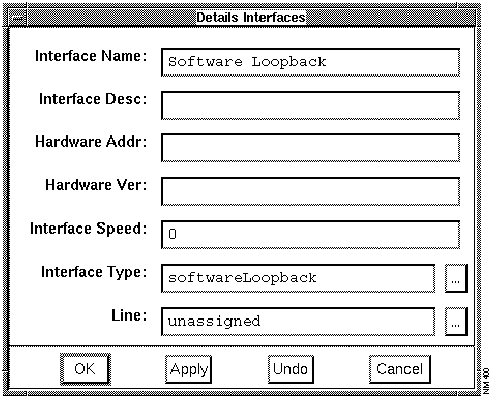
To add or edit the interface from the CiscoWorks database, perform the following steps:
Figure 1-4 : Edit Menu of Device Management
Figure 1-5 : Details Interfaces Window Besides clicking on the OK button, you can act on the information in the Details Interfaces window by clicking one of the other command buttons. Click on Apply to save the details information to the CiscoWorks database and to keep the Details interfaces window open. Click on Undo to revert to the last saved or applied details. Click on Cancel to close the window without keeping any changes you made since the last time you clicked on the Apply.
To delete a database record on an existing interface, perform the following steps:
Adding, Modifying, or Deleting Contact-Name Information
The Contacts portion of the Device Management window lists information on the individuals who are designated to support the selected device. You can add multiple contacts from an already existing database, or list, of contacts but can only edit or delete one contact at a time.
If you want to create database records of contacts, use the People form under the Forms menu in the Device Management window. (See the section "Adding People Data" later in this chapter.)
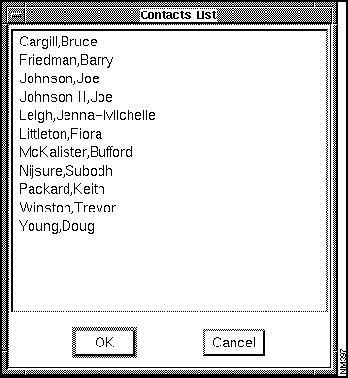
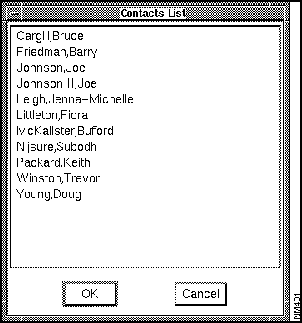
To add contact names from an established pool of contacts (already in the database), perform the following steps:
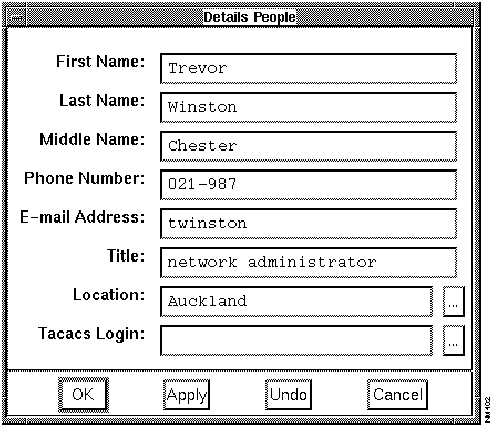
To edit an existing contact from an established pool of contacts, perform the following steps:
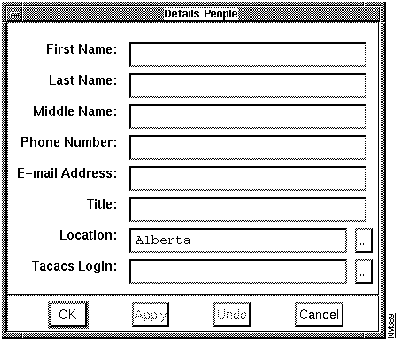
Besides clicking on the OK button, you can act on the information in the Details People window by clicking on one of the other command buttons. Click on Apply to save the details information to the CiscoWorks database and to keep the Details People window open. Click on Undo to revert to the last saved or applied details. Click on Cancel to put away the window without keeping any changes you made since the last time you clicked on the Apply.
To delete a contact from an existing pool of contacts, perform the following steps:
For information on Device Management window error messages, refer to Appendix B, "Troubleshooting CiscoWorks Errors."
The initialize process automatically collects information about network devices, thereby minimizing the amount of data you must enter manually into the database table.
When you select Initialize from the Options menu, the initialize process starts. This process polls the network and obtains the details information (such as the MIB object) from the selected device. The collected data displays in the corresponding fields. (See Table 1-6.) The Sybase tables initialized include the following tables: devices, interfaces, if_addresses, domains, and controllers.
Table 1-6 : Data Fields Filled in by the Initialization Process
For information on how to select additional MIB objects for polling the network, refer to the section "Creating Polling Tables Using Device Polling" in Chapter 4. For details on how to modify or add MIB objects in the MIB file, refer to Appendix A, "MIB Files and Objects."
Adding a Device Using the Initialize Command
To run the Initialize process, perform the following steps:
Adding a Device Without the Initialize Command
If you try to add a device manually (without the initialize command), you might receive the error message, "The column xxxx in table devices may not be null." You also can add devices that exist in the platform database, but do not yet exist in the CiscoWorks database, by using the Sync w/Sybase application. For instructions on this application, refer to the section "Using Sync w/Sybase."
Searching for Device Information
If you are uncertain about the name or spelling of any database record that is part of Device Information, you can use the CiscoWorks Search menu to find the needed information, or at least narrow your choices. The Search menu is available in all Device Information windows. Because device locations, in particular, are sometimes difficult to find, an illustrated example of how to use the Search command is found in the section "Locations Window." However, you can still perform the following straightforward steps to search for device information:
Refer to the following table (Table 1-7) for the supported wildcards and their meanings:
Table 1-8 : Expressing Wildcards as Literal Characters
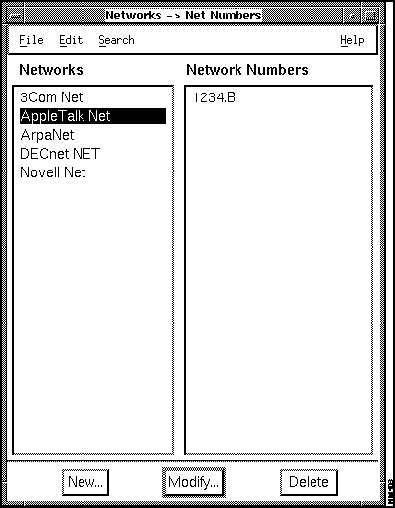
Networks---> Net Numbers Window
The Networks---> Net Numbers Window is available from the Forms menu of the Device Management window. Use this form to enter information that is critical to the needs of the network manager. This information allows you to identify and isolate sources of difficulties, and to quickly identify the administrative support for the networks.
The Network---> Net Numbers window provides options for entering data about a particular network and saving the information to the Sybase database. From the Networks---> Net Numbers window, you can access additional subwindows to enter the network administrator's name, search for text strings, as well as add, edit, or delete network numbers.
Perform the following steps to enter information into the Networks---> Net Numbers Window from the Forms menu, select Network -> Net Numbers. You see the Networks---> Net Numbers window. (See Figure 1-8.)
Figure 1-8 : Networks ---> Net Numbers window Add, modify, or delete information on your network as your needs determine. Refer to Table 1-9 for descriptions of each of the components. The following subsections provide detailed instructions on adding, modifying, and deleting network information.
Table 1-9 : Network---> Net Numbers Window Components
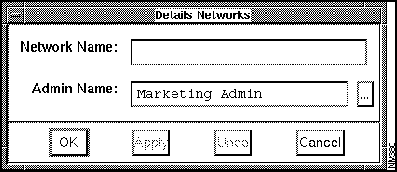
To add a network name to the CiscoWorks database, perform the following steps:
Figure 1-9 : Details Networks window Besides clicking on the OK button, you can use other buttons to adjust your actions to the details information. If you click on Apply button, the data is saved to the database, but the Details Networks window remains open. Click Undo to revert to the set of changes since you clicked OK or Apply. Click on Cancel to close the Details Networks window without saving any changes.
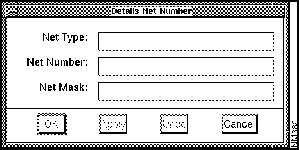
To add a new Network Number, perform the following steps:
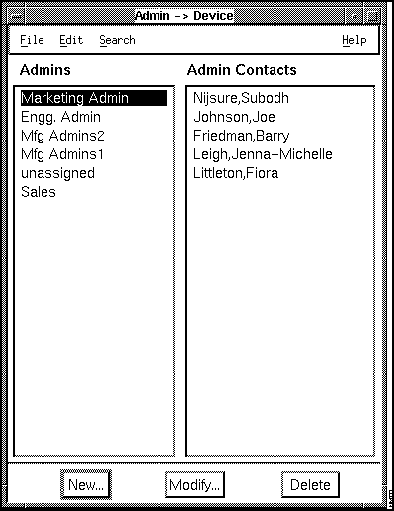
Figure 1-10 : Details Net Number Window The Administrations window allows you to access database records of pertinent information including contacts for lines, devices, and networks.
To complete a new Administrations window and add the corresponding information to the database, perform the following steps:
Figure 1-11 illustrates the Admin---> Device window.
Figure 1-11 : Admin ---> Device Window Table 1-10 : Admin---> Device Window Components
To modify the information on an admin, perform the following steps:
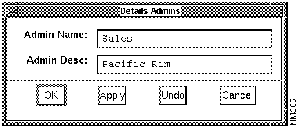
Figure 1-12 : Details Admins Window To delete information on an Admin, perform the following steps:
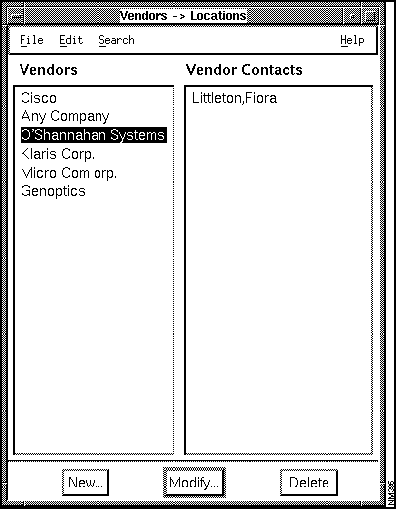
The Vendors Window enables you to update and view information on the vendor, or supplier, of a particular device.
The kind of information you enter in this window can help you with normal servicing, updating of equipment, transmission links, and other related needs.
The vendors table lists the names and locations of any entity you want to classify as a vendor. This can range from a company supplying physical equipment, such as Cisco Systems, to network consultants and service-only firms.
To add new vendor information, follow these steps:
Figure 1-13 : Vendors---> Locations Window
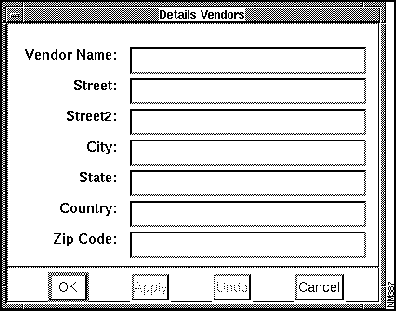
Figure 1-14 : Details Vendors Window Table 1-11 : Vendors---> Locations Window Components
You can make changes and additions any time using the method described in the previous section "Adding Vendors Data," or you can follow the alternative methods described here.
For instance, you may want to add a vendor address signifying a branch office for an existing vendor.
To update or modify vendor data, perform the following steps:
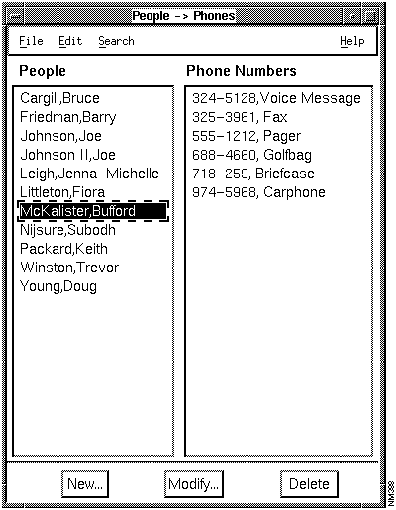
The People--->Phones window (see Figure 1-15) contains the name, title, phone number, and other relevant information about individuals responsible for the administration and support of the network and network equipment. The individuals might include network administrators, equipment vendors, Cisco contacts and others.
The CiscoWorks database links the names, telephone numbers, and other people-specific data to their addresses. This linkage allows you to quickly find essential contacts, such as names and addresses of troubleshooters, vendors, device administrators, or simply an e-mail address or telephone number.
To add information regarding a contact person to the database, follow the steps:
Table 1-12 : People---> Phones Window Components
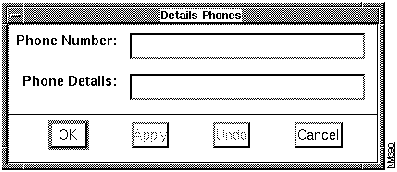
Figure 1-15 : People---> Phones Window Figure 1-16 : Details People Window
Figure 1-17 : Details Phones window You can modify information regarding contact people any time using the method described in previous section "Adding People Data," or you can follow the alternative methods described here.
To delete data regarding a contact person, perform the following steps:
The Locations Window represents a reservoir for network addresses of people, the location of network devices, and any other network associated matter. The information you enter in the Locations window goes into a central repository called Chooser List for locations. With the Chooser List, you can add or update locations data whenever you work with the Details People window or the Device Location window.
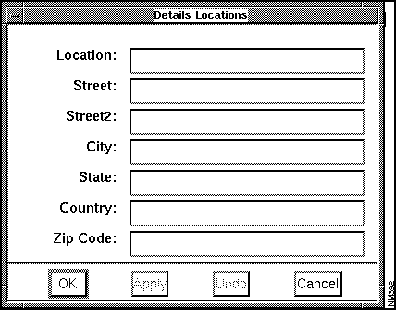
To add a location to the database, perform the following steps:
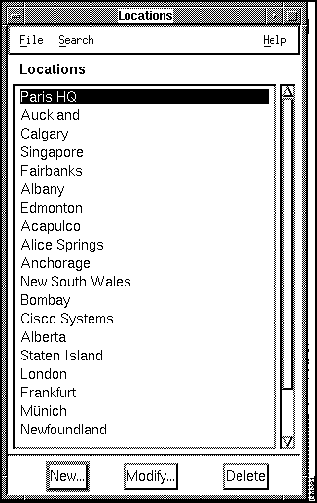
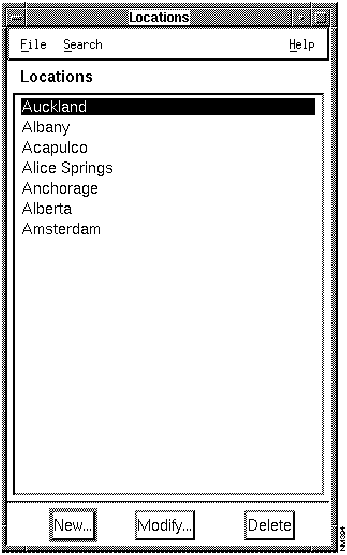
You see the Locations window where you can add, modify, or delete locations information about the contacts people. You can also search for locations data.
Figure 1-18 : Locations Window Figure 1-19 : Details Locations Window Searching for and Modifying Data
At times you may need to look up a specific location, and perhaps then identify the corresponding contact person. Once you identify the locations data you want, you can modify it if necessary. Perform the following steps to search for locations data and if necessary to modify it.
Figure 1-18 shows the Locations window. Table 1-13 describes its components.
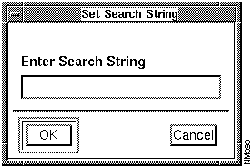
Figure 1-20 : Set Search String Window Figure 1-21 : Locations Window, Following a Single-Character Search Table 1-13 : Locations Window Components
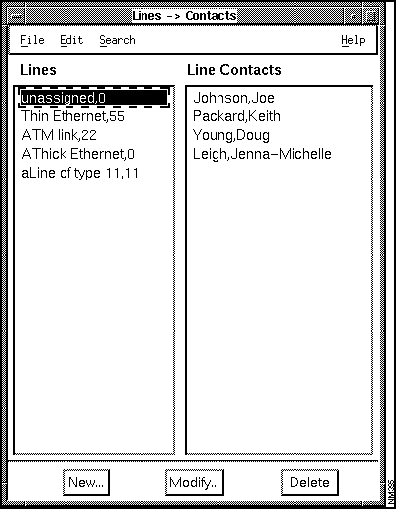
The Lines---> Contacts window contains line identities used in the network. A link must exist between lines and contacts for troubleshooting. A line can have several contacts linked to it.
Figure 1-22 shows the Lines---> Contacts Window. Table 1-14 describes its components.
Figure 1-22 : Lines---> Contacts Window
Table 1-14 : Lines Window Components
Details Lines
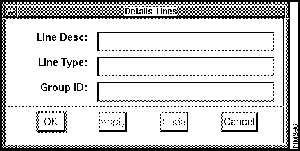
The secondary, Details Lines window, shown in Figure 1-23, consists of three fields, each of which is described is described in Table 1-15. Complete the Details Lines window as your needs determine.
Figure 1-23 : Details Lines window
Table 1-15 : Lines Window Table Groups
Assemble all of the line name designations and associated type identifiers. Along with this data, identify the contacts you want to list for activities such as troubleshooting and administration. Make a list or assemble a group to speed the entry process.
To add lines data, perform the following steps:
Copyright 1988-1996 © Cisco Systems Inc.


Component
Subcomponent
Meaning or Action
File
Print
Exit
Prints a snapshot of the current window.
Closes the current window
Security
Change Domain
Change User
Privileges
Enables user to display another domain
Allows user to login with another username
Displays the user's current access privileges to the Device Management application.
Edit
Add Interface
Edit Interface
Delete Interface
Add Contacts
Edit Contact
Delete Contact
Displays the Details Interfaces window.
Displays the Details Interfaces window of the selected interface.
Permanently removes the selected Details Interface
record from the database.
Displays the Contact List window
Displays the Details People window of the selected contact.
Permanently removes the Details People
record of the selected contact from the database
Search
Find
Show All
Displays the Set Search String box to help you narrow which device names display in the Device Management window.
Displays all known device names in the current CiscoWorks domain.
Forms
Admin
People
Lines
Networks
Vendors
Locations
Displays the Admin--->Device window
Displays the People--->Phones window
Displays the Lines--->Contacts window
Displays the Networks--->Net Numbers window
Displays the Vendors--->Locations window
Displays the Locations window
Options
Initialize
Admin Details
Writes all saved information on devices to the database.
Displays the Device Information window to include Administrative Details pane.
Help
On Version
On Application
Displays the CiscoWorks application version information
Provides help text on the current window.
New
Opens a new Device Information window
Modify
Opens the Device Information window on the selected device. Unless Admin Details is checked from the Options menu, only the Device Details and Inventory Details panes display.
Delete
Displays a warning box that you are about to delete a device-information record from the database. If you click on OK button, the record is permanently removed.
Component
Meaning or Action
Device Name
The hostname. Do not include the domain name.
Domain Name System (DNS) Domain
The internet domain name as distinguished from the domains of your own organization. Do not include the hostname.
Description
A blank comments field to specify any details about the device.
Read Comm(unity)
A password or privilege level that identifies the Read Community string. For example, Public.
Write Comm(unity)
A password or privilege level that identifies the Read-Write Community string. For example, Private.
Device Type (optional)
Click the pick menu to display the Chooser List for device types; then select the type (such as router or bridge) that corresponds to your device. If you do not see your device type, select the device type that may include your device as part of a series. For example, the Cisco 3500 should be device type 3000.
Component
Meaning or Action
Serial Number (Optional)
The serial number of the device, if you know it.
S/w Details (Optional)
The specific software running on the device.
S/w Version (Optional)
The software version running on the device.
H/w Details (Optional)
A blank comments field to specify any needed details about the hardware device.
H/w Version (Optional)
A blank comments field to specify any needed details about the hardware version.
Component
Meaning or Action
Admin
Click the pick menu to display the Chooser List for admins; then select the name of the person responsible for supporting the specified device.
Vendor
Click the pick menu to display the Chooser List for vendors; then select the vendor, or manufacturer, of that device.
Location
Click the pick menu to display the Chooser List for locations; then select the location of that device.
Initialization
Shows you the last time the device was initialized, or updated, by the CiscoWorks database.
Platform Type
Shows you the kind of device that is selected, such as Cisco 7000.

Data Fields
Data Gathered
MIB Object
Device Type
Class of communications device such as router or bridge.
sysServices
DNS Domain
The internet domain name as distinguished from the domains of your own organization.
domainName
Platform Type
Identifies the hardware platform, such as Cisco 7000.
sysObjectID, sysDescr, flashStatus
Software Details
System Description
sysDescr
S/w Version
Identifies the software version running on the communications device.
sysDescr
RW Comm (Read-Write community string)
Shows the Read-Write Community string for a particular device.
None.
RO Comm (Read community string)
Shows the Read Community String for a particular device.
None.
Has Flash
Indicates whether the device has Flash memory.
flashStatus
Has Env
Indicates whether the device contains an environmental Monitor Card. (Note: To run nmenv, you need firmware version 2.0 or later on the environmental monitor card.)
None.
Initialization time
The time at which the device was last initialized.
None.
Interfaces field of the Devices window
Internet Protocol address of each interface table field.
ipAdEntAddr
Data appears in the Interface window in the Subnet Mask field
IP subnet mask number for the interface.
ipAdEntNetMask
Interface Type field of the Details Interfaces window
Type of interface associated with the device. Data is placed in the Interface Type field of the Interfaces table.1
ifType
Description field
Interface description. Data is placed in the Interface Desc(ription) field of the Interfaces table, which is part of the Devices table.
ifDescr
Hardware Address field of the devices Details Interfaces window
Interface hardware address. Data is placed in threadworm Addr field of the Interfaces table.
ifPhysAddress
Interface Speed field of the Details Interfaces window
The speed of the interface.
ifSpeed
Interface Description field
Description of the user configurable interface.
locIfDescr
1 Refer to RFC 1213 for detailed information on interface types.

This means that you did not enter data into mandatory data fields. You must enter data directly in the Location, Vendors, and Administrations windows first. Then return to the Devices window and fill in the Location, Vendor Name, and Admin Name fields. Finally, click on Apply under the text fields to add the device to the database.
Wildcard
Meaning
%
any string of 0 or more characters
_
any single character
[ ]
any single character within the specified range ([a-f]) or set ([abcdef])
[^]
any single character not within the specified range ([^a-f]) or set ([^abcdef])
Search string
Finds
"5%"
5 followed by any string of 0 or more characters
"5[%]"
5%
"_n"
an, in, on, and so forth
"[_]n"
_n
"[a-cdf]"
a, b, c, d, or f
"[-acdf]"
-, a, c, d, or f
"[ [ ]"
[
"]"
]


Component
Subcomponent
Description
File
Print
Close
Prints a snapshot of the current window.
Closes the current window.
Edit
Add Net Number
Edit Net Number
Delete Net Number
Writes a new network number to the database.
Changes the selected network number.
Permanently erases the selected network number.
Search
Find
Show All
Locates the specified network number, if it exists in the database.
Empties the text in the Find box and redisplays all available networks and net numbers.
Help
On Version
On Form
Displays the CiscoWorks version information for this application.
Provides help text on the current window.
Networks column
Displays Network data records.
Net Numbers column
Displays network type, name, and mask data.
New
Opens the Details Networks window.
Modify
Changes data fields of a record.
Delete
Removes a record from the database.

Component
Subcomponent
Description or Action
File
Print
Close
Prints a snapshot of the current window.
Closes the current window.
Edit
Add Admin Contact
Edit Admin Contact
Delete Admin Contact
Opens the Contacts List lookup window; select the name of an established contact, then click on OK.
Opens the Contacts window with the selected individual's name; edit the text field as your needs determine.
Removes the selected name from the database.
Search
Find
Show All
Opens a Set Search String box; enter the name of the admin you want to locate then click on OK.
Empties the Set Search String box and redisplays all available Admins and Admin Contacts.
Help
On Version
On Form
Provides help text on the current window.
Displays the CiscoWorks version information for the Admin -> Device form.
Admins column
Displays administrative group names.
Admin Contact column
Displays contact data on individuals.
Modify
Opens the Details Admins window; allows changes to the selected administrative group name.
New
Opens the Details Admins window; allows the creation of a new administrative group record.
Delete
Permanently removes the selected item from the database.

Component
Subcomponent
Description
File
Print
Close
Prints a snapshot of the current window.
Closes the current window.
Edit
Add Vendor Contact
Edit Vendor Contact
Delete Vendor Contact
Opens the Contacts List lookup window; select the name of an established contact, then click the OK.
Opens the Contacts window with the selected individual's name; edit the text field as your needs determine.
Removes the selected name from the database.
Search
Find
Show All
Opens the Set Search String box; enter the name of the Vendor you want to locate then click on OK.
Empties the Set Search String box and redisplays all available Vendors and Vendor Contacts
Help
On Version
On Form
Displays the CiscoWorks version information for this application.
Provides help text on the current window.
Vendors scroll window
Displays Vendor data.
Vendor Contacts scroll window
Displays Vendor Contacts data.
Apply
Updates changes into the database.
New
Adds a new data record.
Edit
Changes data fields of a record.
Delete
Removes a record from the database.


Component
Subcomponent
Description
File
Print
Close
Prints a snapshot of the current window.
Exits the current window.
Edit
Add Phone
Edit Phone
Delete Phone
Displays the Details Phones window in which you can enter an additional telephone number and description, such as a FAX number or pager number. The number and its description display in the Phone Numbers column of the People---> Phones window.
Displays the Details Phones window of the selected phone number and allows you to modify the contents.
Permanently removes the phone number from the database.
Search
Find
Show All
Opens a Set Search String box; enter the name of the person you want to locate, then click the OK.
Empties the Set Search String box and redisplays all available people and phone numbers.
Help
On Version
On Form
Displays the CiscoWorks version information for this application.
Provides help text on the current window.
Modify
Details People window
Displays people data that you can change and save.
New
Details People window
Displays a blank Details People window where you can enter information about a new contact person.
Delete
Permanently removes information about this contact person from the database.
People---> Phones window. Or enter just, the first few characters such as McBr to view all the contact people whose last names begin with McBr.

Component
Subcomponent
Description
File
Print
Close
Prints a snapshot of the current window.
Exits the current window.
Search
Find
Show All
Displays the Set Search String dialog box to find the name of a specific location or find a set of locations.
Empties the Set Search String box and redisplays all available locations.
Help
On Version
On Form
Displays the CiscoWorks version information for this application.
Provides help text on the current window.
Modify
Displays the Details Locations window in which you can modify information about the selected location.
New
Displays a blank Details Locations window in which you can enter information about a new location.
Delete
Permanently removes the Details locations data of the selected location.

Component
Subcomponent
Description
File
Print
Close
Prints a snapshot of the current window.
Exits the current window.
Edit
Add Line Contact
Edit Line Contact
Delete Line Contact
Opens the Contacts List lookup window; select the name of an established contact, then click on OK.
Opens the Details People window of the selected individual, or line contact; edit the text fields as your needs determine.
Permanently removes the selected Lines Contact from the database.
Search
Find
Show All
Displays the Set Search String dialog box to find the name of a specific location or find a set of locations.
Empties the Set Search String dialog box and redisplays all available Lines and Line Contacts.
Help
On Version
On Form
Displays the CiscoWorks version information for this application.
Provides help text on the current window.
Modify
Displays the Details Lines window where you can modify the information on the selected line.
New
Displays a blank Details Lines window in which you can enter new information about a line.
Delete
Permanently removes the Details Lines information of the selected line from the database.
Fields
Description
Line Desc(ription)
Line Type
Group ID
A blank text field where you can enter whatever comments about the line that meet your needs.
Line type1
Line description
1 Line type is used to identify the line medium and can be any numeric designation. Currently, there is no established standard or Cisco Systems predefined assignments. Examples of typical line type assignments are listed above. If you do not want to use line types, use a default of 0 in this field.