|
|

Managing Cisco Device Configurations
This chapter describes the configuration features that enable you to control your Cisco Systems device configurations and provides information in the following sections:
Device Configuration Applications
Several CiscoWorks applications help manage the configuration of the Cisco devices in your network. A brief description of each application discussed in this chapter follows:
These applications enhance your capabilities as a network administrator by collecting network data as a baseline before your network develops problems. These applications are discussed in detail in the following sections.
Managing Cisco Device Configuration Files
This section describes the Configuration Management application and provides information on the following topics:

The CiscoWorks Configuration Management application can be used with Cisco Systems devices only. Cisco Systems device software must be Software Release 8.2 or later.
Overview of the Configuration Management Process
Figure 1-1 illustrates the configuration management data flow concept. You create the configuration file with a text editor. This data is then converted to a configuration file or series of commands used to configure a device. When a configuration file is loaded onto a device, a copy of the file is retained in the database.
The file sent to the device is also optionally retained in a separate boot file and is available if needed by the remote device for booting after failure or any other restart requirement. Configurations can be retrieved from devices, edited and returned to those devices, retained for future use, or used for analysis and troubleshooting. Configuration files are always archived in the CiscoWorks database.
TFTP is used to accomplish the transfer of configuration files between devices. If TFTP was not configured on your system, make sure you do so by following the instructions in the CiscoWorks administration and installation guide.
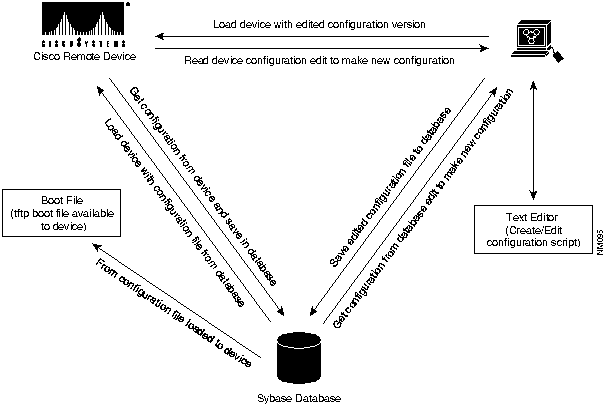
Figure 1-1 : Configuration Management Concept
Configuration Management Window
The following sections describe the scroll windows, options, and command buttons in the Configuration Management window. Figure 1-2 shows a Configuration Management window where a device is highlighted to display the different configuration versions identified with it.
The letter L beside a version in the Configuration Versions scroll window indicates that this version was loaded to the device from the CiscoWorks database. If the configuration file has been changed by any action other than the CiscoWorks configuration management applications, the database will not recognize the new configuration version. As a result of this functionality, the configuration marked with an L may not be the last file loaded into the device. An asterisk (*) beside a version indicates that this version of the configuration file was created but was never loaded to the device.
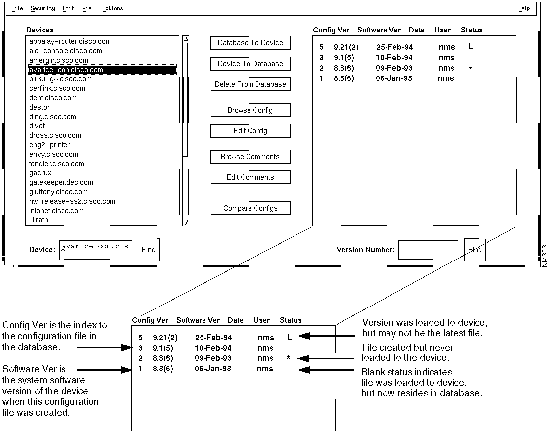
Figure 1-2 : Configuration Management Window
Table 1-1 describes the components of the Configuration Management window, and Table 1-2 lists each command button and the tasks you can accomplish by using these command buttons.
Table 1-1 : Configuration Management Window Components
| Component | Subcomponent | Description |
|---|---|---|
| File | Print
Exit |
Prints a snapshot of the selected configuration file.
Exits the current window. |
| Security | Change Domain
Change User Privileges |
Changes the group of devices which this user has access.
Changes user ID to another user. Views current user ID privileges. |
| Edit | Edit Config
Edit Comments |
Edit a configuration file used by a device or from the database. Refer to "Creating a New Configuration File."
Edit or add information about the configuration file that is unique, critical to its operation, and so on. Each configuration version file has a comments file. Refer to "Editing Configuration Comments Files." |
| View | Browse Config
Browse Comments |
View the contents of a configuration file from a device or from the database. You can search forward or backward for text strings. You cannot make any changes when you are browsing a configuration file. Refer to "Loading a Device Configuration File to the Database."
View the contents of a comments file from the database. You cannot make any changes when you are browsing a comments file. You can search forward and backward for text strings. Refer to "Deleting Configuration Files." |
| Options | Delete From Database
File to Database NVRAM Properties |
Delete a configuration file from the database. Refer to the section "Deleting Configuration Files."
Enables you to copy a configuration file from your system's directory to the database. After a configuration file exists in the database, it can be loaded to the device. Writes the configuration file from the database to the device's NVRAM. Toggle switch is on or off. The default is on. |
| Help | On Version
On Configuration Management |
Displays the CiscoWorks version information.
Provides a manual page about the current window. |
| Device scroll window | Find | Enables you to quickly find a device listed in the CiscoWorks database. Devices with tables in the CiscoWorks database are listed in the Devices scroll window. The configuration files are displayed only if you created and associated configuration files with that device. The configuration file that the database believes is loaded on the device will have the letter L in the entry. New configuration files that were created but never loaded on the device are indicated by an asterisk (*). |
| Configuration
Versions scroll window |
Find | Enables you to quickly find a specific version of a configuration file from the CiscoWorks database. To display the list of configuration files associated with a device, click on a device name in the Devices scroll window within the Configuration Management window. If you did not create and store a configuration file for a device, or if no device name has been highlighted, the Configuration Versions scroll window will be blank. |
Table 1-2 : Configuration Management Command Buttons
| Command Buttons | Task Description |
|---|---|
| Database To Device | Load a configuration file from the database to a device. Refer to the section "Loading a Configuration File." |
| Device To Database | Load a device's configuration file to the database. Refer to the section "Loading a Device Configuration File to the Database." |
| Delete From Database | Delete a device's configuration file from the database. Refer to the section "Deleting Configuration Files." |
| Browse Config | View the contents of a configuration file from a device or from the database. You can search forward or backward for text strings. Refer to "Browsing a Configuration File or Comments File on a Device." |
| Edit Config | Edit a configuration file used by a device or from the database. Refer to "Editing Configuration Files." |
| Browse Comments | View the contents of a comments file from the database. You can search forward and backward for text strings. Refer to "Browsing a Configuration File or Comments File on a Device." |
| Edit Comments | Edit or add information about the configuration file that is unique, critical to its operation, and so on. Each configuration version file has a comments file. Refer to "Editing Configuration Comments Files." |
| Compare Configs | Compare a loaded device configuration file with a configuration file in the database or with a configuration file from another device. You can list the differences between files to troubleshoot configuration problems on a device. Refer to the section "Comparing Configuration Files." |
Understanding Configuration File Requirements
The Router Products Getting Started Guide explains the different ways to create a configuration file for a Cisco device at the time of setting it up. You can create configuration files by using a UNIX text editor such as vuepad, vi, or e3. You can also use the AutoInstall Manager application to create a configuration file for a Cisco device. For more information on the AutoInstall Manager, refer to the section on "Adding New Remote Routers Using AutoInstall."
Knowledge of configuration files and device requirements will help you to create configuration files that can be saved to the CiscoWorks database and downloaded to a device. For information on device requirements, refer to the hardware documentation for the appropriate Cisco device. You can use the following CiscoWorks applications to help you with configuration or image file changes: Software Library Manager, Software Inventory Manager, Device Software Manager, Global Command Manager, and Configuration Snap-In Manager. For more information on these applications, refer to their individual sections later in this chapter.
Configuration File Requirements
Before you create or load configuration files, note that configuration files have certain restrictions regarding syntax and file size. In addition, make sure that the device version number is correct and that an appropriate community string is assigned to the device. For more information, see the section "Requirements for Loading a Configuration File to a Device." If you are not using any name resolution server, ensure that the /etc/hosts file includes both the device name with the domain and the name without the domain in the hosts file.
Syntax
The syntax you use to create a device configuration file is unique to the individual device. When you enter configuration data, be certain the sequence, syntax, and other parameters are in accordance with the requirements for the particular device. In most instances, you enter commands as though you were entering them from the appropriate device console. For more information on configuration file commands, refer to your Router Products Command Reference guide.
Maximum File Size
The maximum size of a single device configuration file is 128 kilobytes (KB). The number of configurations that can be stored in the database depends on how much of available disk memory CiscoWorks allocates to database functions.
For each version of a configuration file, you can store information up to 128 KB for the configuration file comments file. A configuration comments file can be used to store information such as the historical usage of a configuration file or the reasons why a specific change was made to a configuration file on a device.
You can define a text editor to create or edit configuration files. The default text editor for creating configuration files within CiscoWorks depends on which NMS you are using. Refer to the specific section to define your NMS text editor.
Skip this section if you have already specified a text editor or if you plan to use the default NMS text editor. For SNM, the default text editor is textedit. For HP OpenView, the default text editor is vuepad. For NetView for AIX, the default text editor is e3.
Redefining the SNM Text Editor
You can define the SNM text editor in the $HOME/.Xdefaults file or at the command line. Changes you enter in the .Xdefaults file remain in effect until you override them by setting the editor at the command line. Changes you enter at the command line will remain in effect (in the shell in which the command was executed) until you change the EDITOR variable again.
Editing the .Xdefaults File Entry to Specify the Text Editor
The .Xdefaults file on your system contains information that is specific to the OPEN LOOK environment. To define the look of your text editor window, add the following command to the .Xdefaults file, substituting the appropriate options:
The command string is the editor, command, or file to be executed. With EditorFormat, you can create a file or command to represent your own customized editor.
If other editor parameters are defined in the .Xdefaults file, the EditorFormat parameter will override these parameters.
To specify the emacs editor in /usr/local/bin, add the following line to the .Xdefaults file:
This string tells the Configuration Management application (or any CiscoWorks application) to replace the %s symbol with the name of the actual configuration file being opened. The file will be opened using the emacs text editor.
If %s is not entered into the string, the Configuration Management application will append the actual configuration filename to the end of the string.
To add the changes to the file, enter the following command:
To write over the existing information in the .Xdefaults file, enter the following command:
If you receive the following error message, "Unable to start xterm System error: <Error>, Defining the EDITOR Variable from the Command Line
To set the environment variable for the text editor, enter the following command at the UNIX prompt:
This EDITOR environment variable remains in effect in the shell it was created until you reset it. For a more permanent default, perform the tasks in the following section "Editing the .Xdefaults File Entry to Specify the Text Editor."
Redefining the HP OpenView Text Editor
You can redefine the HP OpenView text editor at the command line or in the $HOME/.Xdefaults file. Changes you enter at the command line will remain in effect (in the shell in which the command was executed) until you change the EDITOR variable again. Changes you enter in the .Xdefaults file remain in effect until you override them by setting the editor at the command line.
The HP OpenView text editor default is set to vuepad, located in the /usr/vue/bin directory.
Redefining your Text Editor on NetView for AIX
You can redefine the text editor that the NetView for AIX uses at the command line or in the $HOME/.Xdefaults file. Changes you enter at the command line will remain in effect (in the shell in which the command was executed) until you change the EDITOR variable again. Changes you enter in the .Xdefaults file remain in effect until you override them by setting the editor at the command line.
The text editor default on NetView for AIX is set to e3, located in the /etc directory.
Creating a New Configuration File
A remote device configuration file is a text file created by any standard text editor.
Use your text editor to create and save a new device configuration file. This file is saved in a directory on your system.
After you create a configuration file, transfer the file to the database by selecting a device and using the File to Database command in the Configuration Management window. To load this configuration file to the device, use the Database to Device command in the Configuration Management window.
For an example of a configuration file, refer to the router products manual set.
Copying a File to the Database
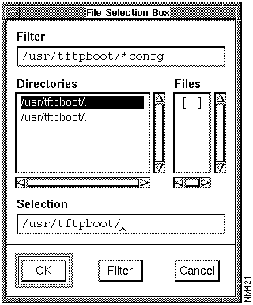
After you create or edit an existing configuration file and save it, use the File To Database command from the Options menu in the Configuration Management window to copy and store it in the database. Configuration files in the database can be downloaded to a specific device.
To copy a file from a directory on your system to the database, perform the following steps:
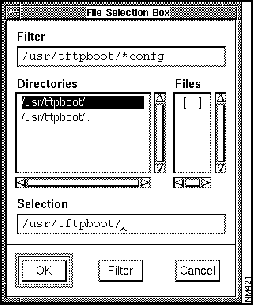
Figure 1-3 : File Selection Window This section describes three methods used to edit a device configuration file:
Editing a Configuration File on Your System
If you already have configuration files in a directory on your system, you can use the text editor to access a specific configuration file, edit it, and save it.
Use the Options>File to Database command in the Configuration Management window to transfer the new device configuration file to the CiscoWorks Sybase database. When this configuration file is added to the database, it can be loaded to a device you specify by using the Database to Device command.
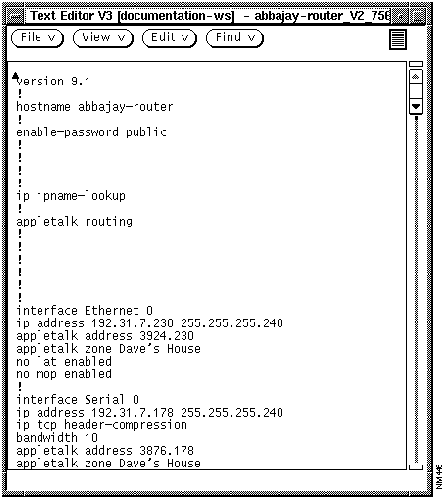
Editing a Configuration File Current Running on a Device
To edit a configuration file that is currently loaded on a device, perform the following steps:
Figure 1-4 : Editing a Configuration File Loaded on a Device Editing a Configuration File That Exists in the Database
To edit a configuration file that currently exists in the CiscoWorks Sybase database, perform the following steps:
You can load a configuration file from the database to a device or from a device to the database. When a configuration file is loaded to a device, your original copy of the loaded configuration file is appended to the comments file associated with this configuration file. In addition, the configuration file that you download to the device can be written to the nonvolatile random-access memory (NVRAM) in the device. As a result, the existing configuration information in NVRAM of the device is replaced with the new configuration information. For detailed information on configuration information in NVRAM, refer to the Router Products Getting Started Guide. You can change the default option to write to NVRAM by selecting Options>NVRAM Properties and toggling the selection to Off.
Requirements for Loading a Configuration File to a Device
Before a configuration file is loaded to a Cisco device, there are three critically important requirements:
For information on appropriate software release versions, refer to your Router Products Release Notes or contact your technical support representative.
Device Version Number
Configuration files created or loaded by using the Configuration Management application can be used for Cisco devices running Software Release 8.2 or later.
Community String
Before a configuration file is downloaded to a device, the community string for the device must be specified as RW (ReadWrite). If the community string is ReadOnly (RO), a configuration file cannot be downloaded to a device. To verify the community string for a device, refer to "Modifying a Device" in Chapter 6. For details regarding router settings, refer to the Router Products Configuration and Reference publication.
IP Address-to-Host Name Mapping In order for a new device to display in Configuration Management, or other CiscoWorks applications, you must run Sync w/Sybase and ensure that the new device name is included in the Domain Name System (DNS) database file or other name resolver such as NIS. Add a line similar to the following to the ensure that the IP address-to-host name mapping exists for the new router:
Also ensure that the domain name in the Device Management window agrees with the name resolver domain, for example cisco.com.
Option for Enabling Boot File Generation
When a configuration file is loaded from the database to a device, an image of the loaded configuration file can be saved in a TFTP boot file in the TFTP boot directory. If the device is down, you have the choice of retrieving the image of the configuration file from the TFTP boot directory that is defined in the /etc/syslog.conf file (usually /tftpboot or /usr/tftpdir); however, the TFTP boot directory may not provide a secure storage location because almost all users can access this directory. Therefore, you may want the boot file generation feature to be turned on.
By default, CiscoWorks does not enable the boot file generation feature in the TFTP boot directory, unless you activate it by editing the .Xdefaults file and turn it on.
To edit the .Xdefaults file, perform the following steps:
Loading a Configuration File to a Device
After you create and add a configuration file to the database, you can load the configuration file from the database to the device, if the TFTP feature was already set up for your system. For instructions on setting up TFTP, refer to the CiscoWorks administration and installation guide.
To load a configuration file to a device, perform the following steps:
Loading a Device Configuration File to the Database
If a configuration file is loaded on a device, you can load that file to the database by selecting the device name from the Devices scroll window and clicking on Device To Database. This gets the configuration file from the device and copies it to the database.
When the configuration file is read from the device, it is assigned a new version number, added to the database as a machine record version, and listed at the top of the list of configurations in the Configuration Versions scroll window.
If you receive the following error message, "Confman error in device to Database. Unable to open peer," it may indicate a device name resolution problem. For information on fixing this error, refer to the section "IP Address-to-Host Name Mapping."
If problems still persist, check to see that you have the correct password and permissions to alter configurations on this device.
Browsing a Configuration File or Comments File on a Device
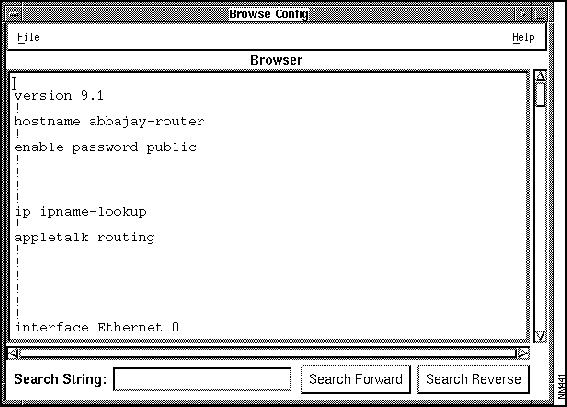
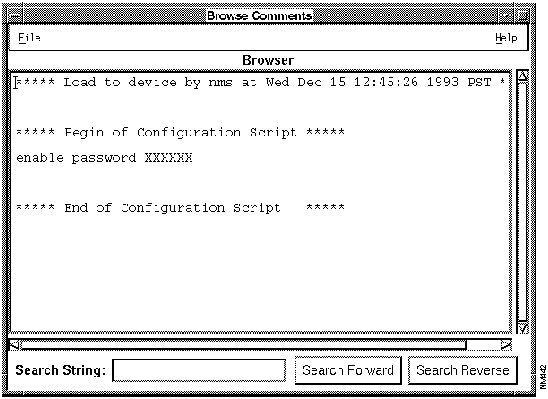
You can browse a configuration or comments file that is either loaded on a device or in the database.
To view a configuration or comments file from a device without making revisions, perform the following steps:
Figure 1-5 : Browse Config Window Displaying a Configuration File from a Device Figure 1-6 : Browse Comments Window Editing Configuration Comments Files
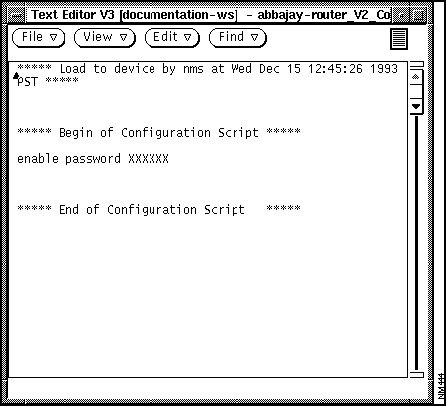
When a configuration file is created for a device, it will also have a blank comments file associated with it. If the configuration file is loaded to the device, a copy of the original configuration file is appended to the comments file.
The maximum size of a comments file is 128 KB. It can be edited and used to record information about a configuration file. For example, you could add some comments on how a configuration file differs from other versions of the file, or specify the names of other devices that use identical versions of this configuration file. If you provide a brief history of the configuration file in this comments file, other users may find it useful to refer to the comments file for general information.
To edit a comments file associated with a configuration file, perform the following steps:
Figure 1-7 : Edit Comments Window
You can delete configuration files from your database. When you accumulate several versions of configuration files in the database, you may want to delete older versions that you no longer use. Periodically, you can also free up disk space and reduce confusion by eliminating outdated configuration files in the database that are outdated.
To delete a device configuration file from the database, perform the following steps:
To obtain a new version of this configuration file, perform a device-to-database operation. To download the newer version of the file to the device, perform a database-to-device operation. The new version will be marked as L to indicate that it is the loaded file. Because the new version is marked L, you can now delete the previously loaded version of the configuration file.
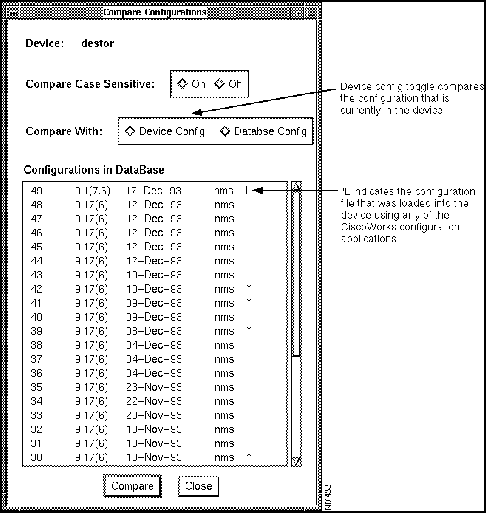
The Configuration Management application enables you to compare the following:
In the Compare Configurations window, use the following descriptions to help you determine which files to compare:
Comparing a Configuration in a Device with the Database Version
To compare the configuration file in a device with the configuration file in the database, perform the following steps:
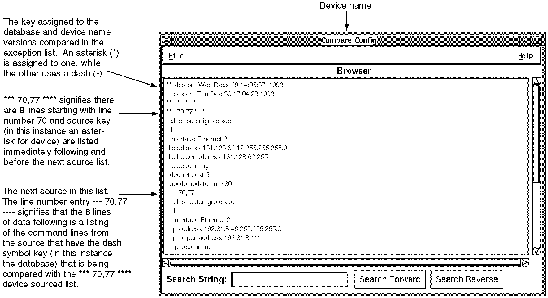
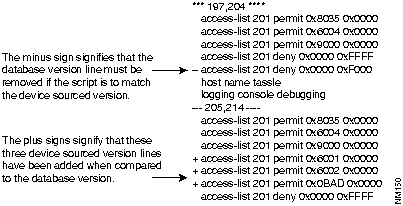
Figure 1-8 : Compare Configurations Window Figure 1-9 : Compare Configuration Exception List The compare function uses the diff command described in the UNIX documentation accompanying your workstation. For more information on diff, refer to the manual page on diff. In diff, operator characters are located in the left column and are in the form of !, *, +, and - . These operators tell you how to interpret the relationship between the two command strings. Table 1-3 describes three of these operators.
Table 1-3 : Compare Config diff Operators
The exception list in Figure 1-10 illustrates how you can clearly determine where command lines differ, in what way they differ, and to what extent.
Figure 1-10 : Compare Configuration Exception List Comparing Two Device Configuration Files in the Database
If your database contains numerous configuration files for a device, you can compare two configuration files in the database for the same device. This feature is helpful if you revised a configuration file for a device and wish to compare the new configuration file with an older version.
To compare the configuration files in the database for a device, perform the following steps:
Using the nmconfig Command for Batch Processing
In addition to using the graphical-based Configuration Management window, you can use the nmconfig command at the UNIX command line to perform batch processing tasks. This section describes using the nmconfig command line interface to perform these tasks.
The nmconfig command parameters are described in Table 1-4.
Table 1-4 : nmconfig Command Parameters
The command line syntax of the nmconfig command follows:
An example of the nmconfig command and the use of parameters follows:
In this example, the nmconfig command selects a given device name list, mails the output to the user, places the log file in a specified directory, specifies a CiscoWorks domain, and specifies the getconf option. You must enter the Sybase username and password each time you run this command.
Comparing Configurations Using nmconfig
Using the nmconfig command, you can compare a current device configuration file with the version identified by the letter L in the Configuration Versions in Database window. As a result, any changes to the configuration file on the device can be immediately reviewed.
You can automate the comparison of the configuration files on a daily basis by adding the nmconfig command to the Global Command Scheduler application. The results of the comparison will indicate whether any changes occurred in the configuration file on the device. You can use the nmconfig command either with one device, a set of specified devices, or all devices listed in the database.
An example of the compare configuration nmconfig command follows:
Copying the Device Configuration File to the Database Using nmconfig
Using the nmconfig command, you can get the current device configuration file and copy it to the log file using the -l option.
An example of the compare configuration nmconfig command follows:
Adding nmconfig Command to the Scheduler
To automate nmconfig, you can use the Global Command Scheduler.
To add the nmconfig command to the Global Command Scheduler from the command line interface, enter the following:
To use a command file to add nmconfig command (or any command) to the Global Command Scheduler, enter the following:
For more information on the Global Command Scheduler, refer to the section "Scheduling a Command for Periodic Execution."
The nmconfig command generates three output files: the log file (nmconfig.log.XXXXX), the summary file (nmconfig.summary.XXXXX), the compare diff file (nmconfig.diff.XXXXX), and the configuration file, <device_name>.confg. XXXX stands for the process identification number or pid.
The log file captures messages indicating whether or not the configuration comparison between files matches or produces differences, if the device is unreachable, or if there are any other errors. The following is a sample log file:
The summary file briefly lists the results of the configuration option performed.The following is a sample summary file:
The diff file displays the results of the configuration comparison between a loaded device and the database version. For an explanation of the diff file output, refer to the section "Comparing Configuration Files" earlier in this chapter. A sample diff file follows:
The following is an example of an email nmconfig sends once the program is finished:
Adding New Remote Routers Using AutoInstall
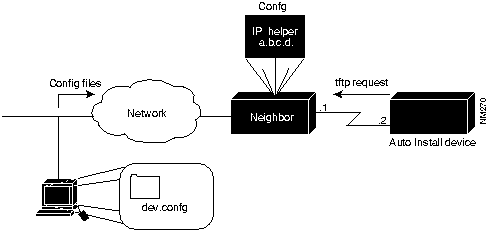
The AutoInstall Manager application works in conjunction with the AutoInstall feature, which is built into every Cisco router. AutoInstall Manager enables you to perform autoinstall tasks remotely via the workstation running CiscoWorks. All control is exercised from a central site, which leverages your administrative resources.
The AutoInstall Manager application effectively creates a plug-and-play environment for installers and central staff, simplifying tasks without compromising full routing services at remote locations. Using AutoInstall Manager for serially connected routers, you need only enter a few pieces of information along with identifying the nearest router interface.
Figure 1-11 : AutoInstall Concept An overview of the AutoInstall Manager tasks to remotely deploy a new router follow:
or
Before proceeding with the AutoInstall Manager procedures, ensure that all the requirements listed in the following section "AutoInstall Manager Requirements" are followed.
For more information on the AutoInstall feature in the router software, refer to your router products documentation.
AutoInstall Manager Requirements
For AutoInstall Manager to work, the following requirements must be met:
How to Use AutoInstall Manager
There are two methods you can follow when using the AutoInstall Manager. An overview of the methods follows:
For more detailed instructions on how to perform an autoinstall of a Cisco device, continue to read the following sections. For a description of the NVRAM Properties option in the Configuration Management application, refer to the section "Loading a Configuration File to a Device," earlier in this chapter.
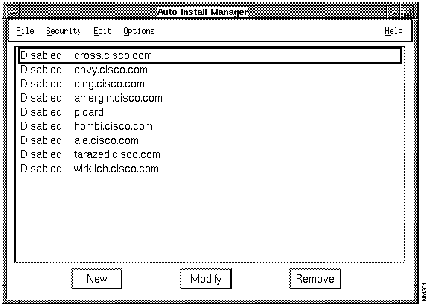
The AutoInstall Manager window should be viewed as a "to do" list. This to do list contains the devices that need to be installed or are in the process of being installed.
Figure 1-12 illustrates the AutoInstall Manager window. Table 1-5 describes its components.
Figure 1-12 : AutoInstall Manager Window Table 1-5 : AutoInstall Manager Window Components
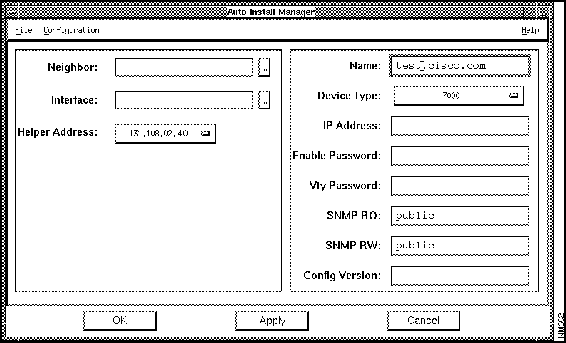
Figure 1-13 illustrates the AutoInstall Manager Device Details window. Table 1-6 describes its components.
Figure 1-13 : AutoInstall Manager Device Details Window Table 1-6 : AutoInstall Manager Device Details Window Components
Adding New AutoInstall Device Data
Before you can deploy a new router from the CiscoWorks workstation, you need to ensure the following tasks are completed by the remote installer:
These actions do not need to occur before you perform these procedures, but need to happen for the autoinstall of the device to occur.
To add new autoinstall device data, perform the following steps:
To complete the autoinstall procedure, continue to the next section, "Choosing a Configuration File for AutoInstall Manager."
Choosing a Configuration File for AutoInstall Manager
Before you can choose a configuration file for your new autoinstall device, you need to complete the steps in the section "Adding New AutoInstall Device Data."
There are two ways you can define a configuration file for your new router:
Procedures for defining a configuration file follow.
Creating a Default Configuration File for AutoInstall Manager
The minimal configuration file allows you to Telnet to the device and perform SNMP queries.
To create a default configuration file, perform the following steps:
You are ready to enable the autoinstall feature on the device from the AutoInstall Manager window. To complete the procedure to autoinstall your new device, refer to the section "Enabling a New Device Using the Enable Command."
Selecting an Existing Configuration File for AutoInstall Manager
You can select a configuration file you want to load into the new router and store it in the database. You access the configuration file through the File to Database option in AutoInstall Manager. AutoInstall Manager copies the selected configuration file into the database to load into the new device.
To select a configuration file, perform the following steps:
You are ready to enable the autoinstall feature on the device from the AutoInstall Manager window. To complete the procedure to autoinstall your new device, refer to the section "Enabling a New Device Using the Enable Command."
Enabling a New Device Using the Enable Command
Enabling a device performs the following procedures:
By performing autoinstall with a minimum configuration file in the device, you can now Telnet and get SNMP information from the new device.
To enable a new Cisco device and complete the autoinstall procedure, perform the following steps:
Removing an AutoInstalled Device from AutoInstall Manager
After you confirm that the Cisco device is operational, we recommend you remove the device from the AutoInstall Manager "to do" list. Removing the device performs the following functions:
To remove your new autoinstalled device from the AutoInstall Manager application, perform the following steps:
You have completed the autoinstall procedure. If you want to clean up any remnants of the autoinstall procedure, continue to the next section. This is an optional step.
For information on what to do next, refer to section "Where to Go After the AutoInstall Is Complete."
Disabling a Device from AutoInstall Manager
The disable process cleans up the remnants of the autoinstall process. You can also disable the device if you are in the process of autoinstalling a new device and cannot complete the procedure.
Disabling the device performs the following:
To disable the device from the AutoInstall Manager application scroll window, perform the following steps:
For information on what to do next, refer to the following section, "Where to Go After the AutoInstall Is Complete."
Where to Go After the AutoInstall Is Complete
After the new device has been autoinstalled, you have several tasks to complete to ensure you can successfully manage your new Cisco device.
To completely manage this new device within CiscoWorks, you can perform the following tasks:
Managing Cisco Systems Software and Microcode Upgrades
The software management set of applications consist of three applications that assist it in managing system software and microcode in Cisco routers via the CiscoWorks network management workstation. The trio of applications that perform software management are described following.
These applications enable you to upgrade software and microcode images for routers with run-from- Flash and run-from-RAM capabilities which include the following routers: Cisco 2500, 3000, AGS+, Cisco 4000, Cisco 7000, CGS, and MGS routers.
Software Management Applications
There are three applications that perform software management include: Software Library Manager, Software Inventory Manager, and Device Software Manager. These applications work together to manage the system software and microcode in Cisco routers. For more details on each application, read the following sections.
Software Library Manager Overview
The Software Library Manager application enables you to perform the following tasks:
Software Inventory Manager Overview
The Software Inventory Manager application enables you to perform the following tasks:
Device Software Manager Overview
The Device Software Manager application enables you to perform the following tasks:
Software Management Requirements
For any of the software management applications to work, the following software and hardware requirements must be met:
Table 1-7 : Router and Software Requirements for Use with Device Software Manager
Allocating Disk Space for Software Management Applications
The Software Library Manager and Device Software Manager applications require at least 6 MB (6144 KB) of free space for the /tmp directory and 6 MB (6144 KB) of free space for the TFTP directory. The TFTP directory name is dependent on which type of workstation you are using. For HP UNIX workstations, the default TFTP directory is /usr/tftpdir. For Sun workstations, the default TFTP directory is /tftpboot.
To confirm that your system meets the minimal requirements, perform the following steps:
How Device Software Manager Works
The Device Software Manager application determines which device it is upgrading and then performs the following checks to ensure the image transfer is accurate:
The sequence followed for boot system configuration follows:
There are several windows that are used to perform software management:
The software management window descriptions follow.
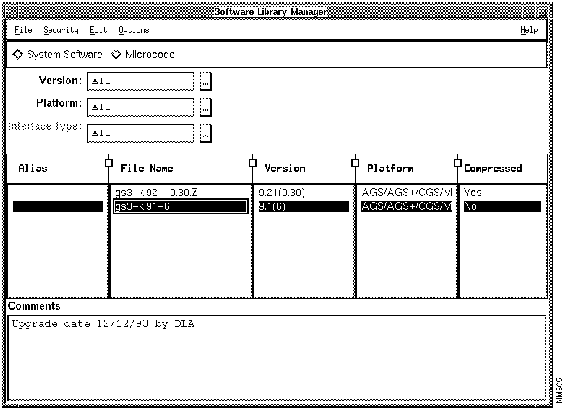
Figure 1-14 illustrates the Software Library Manager window. Table 1-8 describes its components.
Figure 1-14 : Software Library Manager Window Table 1-8 : Software Library Manager Window Components
Importing an Image File into Software Library Manager
You may need to import system or microcode images into CiscoWorks when you upgrade your Cisco devices. Image filenames cannot be changed.
There are three ways to import these images:
Procedures for importing images follow.
Importing From the UNIX File Directory
To import a file from the UNIX directory, perform the following steps:
Figure 1-15 : File Selection Window---Import from File Option in Software Library Manager This task can be completed on a Sun workstation only. If you are using an HP-UX or RSC/6000 machine to import a file from a PC diskette, transfer the file to a UNIX directory that is accessible from the network and follow the instructions in the section "Importing From the UNIX File Directory" to import the file.
To import a file from a PC diskette, perform the following steps:
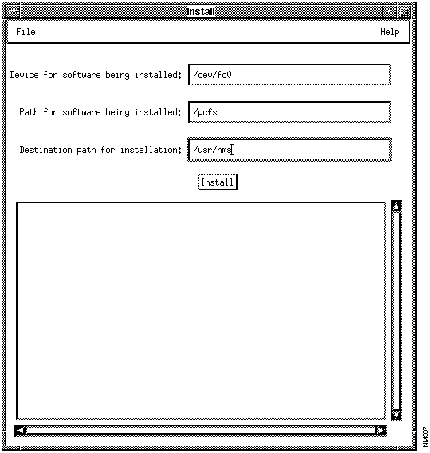
Figure 1-16 : Install Window---Import from Disk Option in Software Library Manager To import a file from the Flash memory on a router, perform the following steps:
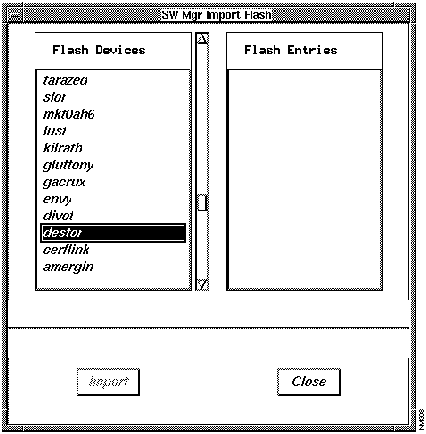
Figure 1-17 : Import Flash Window---Import from Flash Option in Software Library Manager Viewing and Sorting Available Cisco Release Images
To view or sort file image information in Software Library Manager, perform the following steps:

% xrdb -merge $HOME/.Xdefaults
% xrdb -load $HOME/.Xdefaults
check your PATH to see that xterm is included." For instructions on specifying a path for xterm, refer to the CiscoWorks Administration and Installation Guide.

131.108.62.14 new_device.cisco.com new_device
*Bootfile:on
#
xrdb -merge $HOME/.Xdefaults
Could not delete the loaded version of the configuration file.

Operators
Description
!
The line placement and function is the same in the database and device sourced versions, but the line has been modified. Both versions are in the exception list so you can compare them. In Figure 1-10, you can see that the addresses in lines 73 and 74 have been modified in the device named tassle's version.
+
The line has been added in the version configuration file, when compared to the other configuration file. In the database configuration file, a plus sign means the database version has command lines that the device configuration file version does not. Viewed from the device configuration file list side, a plus sign means the device version has a command line that does not exist in the database version.
-
The line has been deleted in the version command file, when compared to the other configuration file. In the database command file, a minus sign means the database version does not have command lines that the device configuration file version does. Viewed from the device side, a minus sign means the device version is missing a command line that exists in the database version.
a
The line has been appended in the version command file, when compared to the other configuration file. In the database command file, a minus sign means the database version does not have command lines that the device configuration file version does. Viewed from the device side, a minus sign means the device version is missing a command line that exists in the database version.
d
Delete. After the line number preceding the d, delete the lines specified.
Parameter
Description
-l dirname
Specifies the directory to which nmconfig saves its results, in this case, the log directory. dirname is the path of the directory. If the directory does not exist, nmconfig flags an error and exits.1
If this parameter is not specified, the program will use $NMSROOT/log as the default log file directory.
-Uusername
Specifies the Sybase user account name. This is a required entry. (A space between -U and the username is mandatory.)
-Ppassword
Specifies the Sybase user account password. This is a required entry. (A space between -P and the password is mandatory.)
The default password is commonly NULL; you can specify -P only.
-i
Specifies the comparison to be case insensitive (or to ignore the difference between uppercase and lowercase characters). The default is case sensitive.
-m maillist
Specifies a list of email names or an address to whom the program will send the result summary file. The default is no mail.
-d device
Specifies a device name or a device list. Separate devices with a comma. Use the percent sign, %, as the wild card symbol. For example, -d z%,firewall.
-v
Prints current CiscoWorks version information. This must be the first argument; all other arguments are ignored.
-h
Prints help information. This must be the first argument; all other arguments are ignored.
-o
Specifies the configuration function option: Device To Database (getconf command) or Compare Configs (compare command).
-D or -g
Specifies the security domain for the device or device list. If not specified, the default World domain is used.
-dom
Internet domain name of the device or device list. Use this argument if you have devices in different Internet domain names.
-C cmdfile
A file containing the previous set of parameters. A cmdfile can be created with the above parameters and reused. The keyword options of this file follow: maillist, device, ignorecase, username, password, and logdir.
A sample file could include, but not be limited to, the following keywords:
maillist = sybase, nms
devices = x%, d%
ignorecase = yes
security-domain = World
username = your_name
password = your_password
logdir = your_logdir
option = getconf or compare
internet-domain=cisco.com
community = secret
-s community string
When you use this option, the community string you enter overrides the device community string. When you are loading a configuration file to a device, this temporary community string is sent to the device.
1 Do not use a tilde (~) character when specifying a log file directory name; use the full path name.
<-m maillist> <-l logdir> <-c command_file> <-s community_string> <-g group> <-dom domain>
nmconfig -d hq_device% -s secret -l $NMSROOT/des -D cw_domain -O getconf -U username

-P password
nmconfig -d device -s community_string -l logdir -D cw_domain -O compare -U username -P
password
nmconfig -d device -s community_string -l logdir -D cw_domain -O getconf -U username

-P password
nmscheduler -U cw_user_name -C "nmconfig -d device -s community_string -i -l dirname

-U username -P password -o option" -N MyGlobalCmd
nmscheduler -U cw_user_name -C "nmconfig -C /usr/tmp/MyCommandOptionsFile" -N MyGlobalCmd
******** Nmconfig Log File ********
  ******** Started : Thu Jul 21 11:46:22 1994

  ---------- Reading Command File cmdfile
  ---------- End of Reading Command File cmdfile
  ---------- Input Arguments Sanity Check
  ---------- End of Input Arguments Sanity Check
  --------------------------------------------------
  <bones.cisco.com>:Unable to compare config.

  Toolkit getting configuration error.
  Success of TFTP transfer is unverified
  Please check system setup
  and community string.
  --------------------------------------------------
  --------------------------------------------------
  <bones-con.cisco.com>:Unable to get loaded(L version) config from database.


  Database reading record error.
  No rows found in the DevConfHist table
  --------------------------------------------------
  --------------------------------------------------
  <smith.cisco.com>:The loaded version of config is
  identical to the current device config.
  --------------------------------------------------
  --------------------------------------------------
  <backwall.cisco.com>:The loaded version of config is
  identical to the current device config.
  --------------------------------------------------
  --------------------------------------------------
  <zangbutt.cisco.com>:The loaded version of config is
  different than the current device config.
  --------------------------------------------------
  #Compare Device Configuration Summary
  #Started : Thu Jul 21 11:46:22 1994

  bones.cisco.com   // Result: Other problems(see log file)
  bones-con.cisco.com   // Result: Other problems(see log file)
  smith.cisco.com   // Result: Identical
  backwall.cisco.com   // Result: Identical
  zangbutt.cisco.com   // Result: Different
#Compare Result File
  #Started : Thu Jul 21 11:46:22 1994

  *** /tmp/confman1531/zangbutt  Thu Jul 21 11:46:49 1994
  --- /tmp/confman1531/zangbutt_Loaded  Thu Jul 21 11:46:47 1994
  ***************
  *** 12,23 ****
   !
   !
   !
  - vines routing 30039474:1
   !
   !
   !
    !
  - !
   interface Ethernet 0
   ip address 131.108.165.71 255.255.255.0
   no mop enabled
  --- 12,21 ----
  ***************
  *** 24,33 ****
   !
   interface Serial 0
   ip address 131.108.170.71 255.255.255.0
  ! encapsulation X25
  ! vines metric 35
  ! x25 address 12
  ! x25 map VINES 30015800:1 11 BROADCAST
   !
   !
   router igrp 109

  --- 22,30 ----
   !
   interface Serial 0
   ip address 131.108.170.71 255.255.255.0
  ! encapsulation FRAME-RELAY
  ! frame-relay map VINES 30011E7A:1 113 broadcast
  ! frame-relay map IP 131.108.170.31 113 broadcast
   !
   !
   router igrp 109
  From: Joe Garlabeadaface <jgarlaface@cisco.com>
  Received: from localhost (jgarlaface@localhost) by jg-ss10.cisco.com (8.6    .5/8.6.5) id
LAA01553 for joe; Thu, 21 Jul 1994 11:46:50 -0700
  Date: Thu, 21 Jul 1994 11:46:50 -0700
  Message-Id: <199407211846.LAA01553@joe-ss10.cisco.com>
  To: jgarlaface@cisco.com
  Subject: nmconfig is finished at Thu Jul 21 11:46:49 1994

  #Compare Device Configuration Summary
  #Started : Thu Jul 21 11:46:22 1994

  bones.cisco.com   // Result: Other problems(see log file)
  bones-con.cisco.com   // Result: Other problems(see log file)
  smith.cisco.com   // Result: Identical
  backwall.cisco.com   // Result: Identical
  zangbutt.cisco.com   // Result: Different

Component
Subcomponent
Description
File
Print
Exit
Prints a snapshot of the current window.
Exits the current window.
Security
Change Domain
Change User
Privileges
Enables you to change your domain.
Enables you to change your username in order to access this application.
Displays the current user's security privileges.
Edit
New
Modify
Remove
Brings up a window where the user can define a new autoinstall device.
Brings up the selected device information in the Device Details window.
Removes the selected device information from the autoinstall list.
Options
Enable
Disable
Performs the autoinstall procedure on the selected device.
Remove the device configuration from the /tftpboot directory.
Help
On Version
On AutoInstall Manager
Provides information on the application version.
Provides information on the current window.
Device list
Contains new device name and status of device (enabled or disabled).
Component
Subcomponent
Description
File
Print
Close
Prints a snapshot of the current window.
Closes the current window.
Configuration
Create Default
File to Database
Creates a minimal configuration file to autoinstall into the new device.
Allows you to use an existing file from a UNIX directory to autoinstall into the new device.
Help
On Version
On AutoInstall Manager
Provides information on the application version.
Provides information on the current window.
Neighbor Device information
Neighbor
Choose the pick menu to pick from a list of device names.
Interface
Contains a list of possible interfaces for neighbor device.
Helper Address field
Contains the IP address of the network management station. For multihomed workstations, you may choose the interface.
New Device information
Name
Device name field. This specifies the name of the autoinstall device.
Device Type
Device type option menu. Includes support for the following device types: unknown, non-Cisco, Cisco-generic, CGS/MGS/AGS, IGS Generic, Terminal Server, Trouter, Protocol-translator, Cisco 3000, Cisco 4000, Cisco 7000, Cisco 2000, AGS+.
IP Address
Contains the IP address serial interfaces. Is obtained automatically via SLARP. Read Only.
Enable Password
The enable password for the device.
Vty Password
The virtual terminal password for the device.
SNMP RO
SNMP RW
Enables SNMP and defines the ReadWrite and ReadOnly community strings for the device.
Config Version
Current version number in the device.
OK
Saves the data to the database and closes the window.
Apply
Saves the data to the database and leaves the window open.
Cancel
Closes the window without saving the changes.
! Default config file for the autoinstall device <
device_name>
!
!
hostname <
device_name>
enable-password
secret
snmp-server community
public RO
snmp-server community
public RW
!
ip route 0.0.0.0 192.31.6.62
!
line console 0
password
mypasswd
login
!
line vty 0 4
password
mypasswd
login
!
end


Cisco Router Type
Router System Software Requirement
Cisco 2500
Software Release 9.14(4)-9.14(8) or later
Cisco 3000
Software Release 9.1(7.5) or later
Cisco AGS+
Software Release 9.1(7.5) or later
Cisco 4000
Software Release 9.14(3.4) or later
Cisco 7000
Software Release 9.17(5.2) or later
All Cisco routers (collection of Cisco 3000, Cisco 4000, Cisco 7000, or AGS+ routers)
Software Release 9.21(0.26) or later or 9.1(8) or later
Cisco 7000 routers on which you want to perform microcode upgrades
Software Release 9.17(5.2) or later; 9.21(0.32) or later
For HP UNIX workstations, enter:
%
bdf
For Sun workstations, enter:
%
df /tmp <
/tftpboot
>
Filesystem kbytes used avail capacity Mounted on
/dev/sd0a 24207 12115 9672 56% /
/dev/sd1b 62031 13230 42598 24% /tmp
/dev/sd1g 1175742 730206 327962 69% /work
Component
Subcomponent
Description
File
Import from File
Import from Disk
Import from Flash
Print
Exit
Enables importing from any UNIX directory.
Enables importing from a Cisco PC diskette. (Sun workstations only)
Enables importing from the Flash memory of a device.
Prints a snapshot of the current window.
Exits the current window.
Security
Change Domain
Change User
Privileges
Enables you to change your domain.
Enables you to change your username in order to access this application.
Displays the current user's security privileges.
Edit
Delete
Edit Comments
Removes a selected device image.
Enables you to associate comments to software images.
Options
Software Inventory Manager
Opens the Software Inventory Manager window.
Help
On Version
On Software Library Mgr
Provides information on the application version.
Provides information on the current window.
System Software/Microcode Toggle
Selects the type of image you plan to load to the Cisco device.
Version
Pick menu to select a Cisco image version.
Platform
Pick menu to select a Cisco device platform.
Interface Type
Pick menu to select an interface on the device.
Spreadsheet Scroller
Alias
User-given name for the Flash configuration file.
File Name
Current file loaded into the Flash memory of the device.
Version
Current software version on Flash memory.
Platform
Current Cisco device platform.
Compressed
Current status of software image.
Comments
User notes about configuration file or device.